
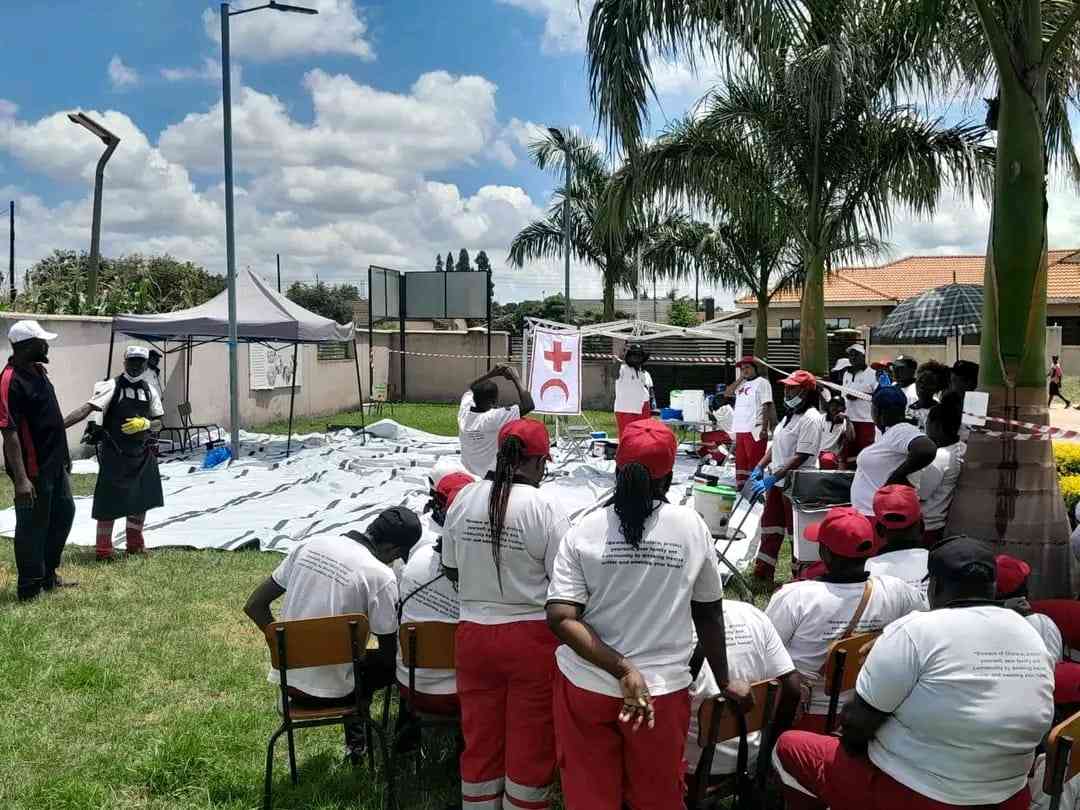
The Zimbabwe Red Cross Society (ZRCS) has intensified preparedness efforts in Harare amid fears of a potential cholera outbreak, with 100 volunteers having undergone reorientation and simulation drills ahead of possible deployment.
Two hundred additional volunteers will be reoriented in the next week as part of the humanitarian organisation’s hands-on exercises that include setting up oral rehydration points (ORPs), demonstrating household water treatment methods and strengthening rapid response systems.
The move follows reports from the Health and Child Care ministry confirming a cholera outbreak in Rushinga district, prompting heightened vigilance in urban centres.
During the reorientation, volunteers engaged in simulation exercises that included setting up of ORPs and water treatment as they prepared for deployment to cholera hotspots in the capital city, which is among major towns prone to the diarrheal infection.
The deployment will see a total of 300 volunteers engage with vulnerable communities on cholera prevention and control ahead of an outbreak.
Volunteers were drawn from cholera hotspots including Glen View, Budiriro, Hopley, Glen Norah and Highfield.
City of Harare and Health ministry officials attended the training and acknowledged efforts being done by the ZRCS as aligned to their early action plans.
ZRCS secretary-general Elias Hwenga said the exercises were aimed at ensuring swift, coordinated action should cases emerge in Harare.
- Chitungwiza sewer infrastructure collapses
- Chitungwiza sewer infrastructure collapses
- Abductions are a crime against humanity: ZLHR
- HCC considers cancelling ZimPhos contract
Keep Reading
“Preparedness is critical in preventing loss of life,” Hwenga said.
“Our volunteers are being equipped with the technical skills and community engagement tools necessary to respond effectively.”
Cholera spreads rapidly in areas with compromised water and sanitation systems. Health experts warn that high-density suburbs remain particularly vulnerable due to overcrowding and intermittent water supplies.
As part of the training, volunteers are receiving refresher courses on infection prevention and control, case identification, hygiene promotion and risk communication.
Hwenga said his organisation’s strategy prioritises community awareness alongside emergency response.
“Our goal is not only to respond, but to prevent,” Hwenga added.
“By empowering communities with knowledge on hygiene and safe water practices, we reduce the risk of transmission.”
With reports of confirmed cases in Rushinga raising national concern, ZRCS has positioned trained teams for rapid deployment should the need arise.
Residents have been urged to practice proper handwashing, treat drinking water and seek immediate medical attention if experiencing symptoms such as severe diarrhoea, vomiting and dehydration.
As the country remains on alert, the message from the humanitarian body is clear: preparedness saves lives — and its volunteers stand ready to act.
Medical doctor and public health expert Johannes Marisa said proactive measures were essential, particularly in high-density suburbs where water and sanitation challenges persist.
“Cholera is a preventable disease, but it spreads very fast when there is contaminated water and poor hygiene,” Marisa said.
“What the Red Cross is doing is commendable because early preparedness reduces fatalities and prevents panic.”
He warned that once cases are detected in urban areas, transmission can escalate quickly if communities are not adequately informed.
“We must not wait for hospitals to be overwhelmed,” Marisa added.
“Community education, access to clean water and rapid response teams are the pillars of containment. Oral rehydration points are critical because dehydration is what kills in cholera cases.”
Marisa also urged residents to take personal responsibility.
“People must treat their drinking water, wash hands regularly with soap and seek medical attention immediately if they experience severe diarrhoea,” he said.
“Delays can be fatal.”


