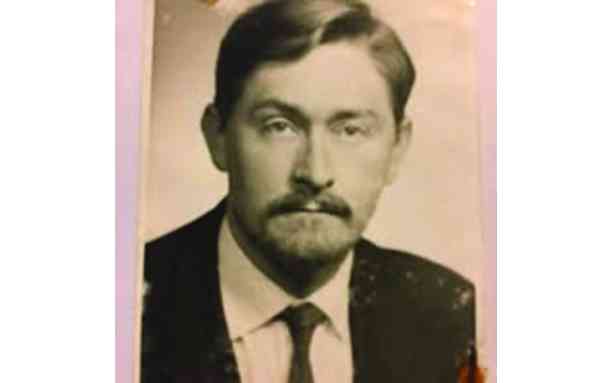
Reginald Henry Fulbrooke Austin (within minutes, ‘Reg’ for all, thus herewith) died barely into his 91st year just over a week ago.
He was a ‘revolutionary legal genius and transformation strategist’, as put by his long-time friend and comrade Jeremy Brickhill.
The score or more people we interviewed or read their praises for this commemorative essay would agree.
Reg’s virtuosity in the history of law and its procedural, constitutional and international forms, combined with his principled integrity and political nous, created a progressive, vibrant, rigorous - and popular - law faculty at the University of Zimbabwe.
Within the decade of his leadership he transformed a reactionary law department to a world-leading, progressive, faculty.
As Isaac Maposa (now of the Zimbabwe Institute, chaired by Reg from 2013 to 2023) recalls, when beginning his legal studies in 1991 he encountered a committed array of lecturers and professors ranging from ‘broadminded’ whites to a mosaic of Marxisant scholar activists spanning the Cold War divides (including the Chinese vs. Russian variety).
Many of the faculty’s graduates are recognised as political and judicial actors across Zimbabwe’s probably more permanent fractures — and across the world within the institutions Reg saw as worthy purveyors of democratic ideals.
Groundwork at the university laid, Reg went on to a stellar, internationally recognised career in what one might call ‘election (and conflict) management’.
- Herentals Queens captain Mukura reflects on football career
- Delta’s Q1 FY25 results: mirror of Zim economy
- Reg Austin:The epitome of a patriotic Zimbabwean intellectual is no more
Keep Reading
From Afghanistan to Zambia and South Africa to Cambodia (in 1992, his election baptism by fire) East Timor, Namibia - as early as 1988, for a month in Lusaka with the UN Council for Namibia and Swapo.
From the Commonwealth sSecretariat, in and out of the UN, and then to Sweden’s International Institute for Democracy and Electoral Assistance (International IDEA) this democratic cosmopolitan also kept working on the increasingly difficult Zimbabwean terrain as the new millennium’s democratic push challenged Zanu PF’s frenetic and fanatical pursuit of its one-party state destiny - displayed so grotesquely by Gukurahundi in the eighties.
I think there were two fundamental and equally weighted components to Reg’s modus operandi through the storms of Zimbabwe’s political history and the winding paths to democracy around the ‘developing’ world.
First, as his daughter Beatrice put it when I asked if Reg was religious: “not at all.
He was a humanist through and through, and always withholding judgement of people with different beliefs”.
This influenced his consensus building ability to get things working on a practical level.
Michael Maley, Reg’s colleague and friend from from their early election-making days 35 years ago with the Commonwealth secretariat in Mozambique to latterly in IDEA (where Reg was tasked with consolidating, streamlining and standardising scores of election guidelines from around the world), summarised Reg’s method for steering elections: steadfastly principled and respectful in his pursuit of clear rules and procedures developed during critically robust fora; followed by strictly minimal “steering through the choppy waters and rule-bending waves of excessive ‘diplomacy’”, which tends only to exacerbate the participants’ mutual suspicions of favouritism.
This ‘functional’ belief in process through clear procedure, strengthened, as Mary Ndlovu remembers from his 1984 contributions to the Legal Resources Foundation, by Reg’s preternatural, nearly casual “capacity to remember details of events long past when nobody else could - and also of course his analytic brilliance in discussing political processes”.
His ability to relax with the Luck Street Blues Band at township Harare’s ‘Egg Marketing Board’ tavern - as I witnessed one memorable 1991 night - and his (in)famous love of speedy car trips between Zimbabwe’s major cities undoubtedly helped too.
The latter skill was useful when dashing in 1992 to the Zambian border with professor Shadrick Gutto, falsely accused of leading UZ students to riotous behaviour, to avoid his deportation to a fateful Kenya. Bravery tied his skills together.
Second - perhaps primus inter pares - was Reg’s loyalty to his founding moments of political consciousness, borne simultaneously firmly and lightly throughout his life and connected to the people concurrent with it.
His founding and fundamental belief was that racial - white - dominance was embedded in the deep structures of Rhodesian society.
This was the deep and dialectical gap on which most of his working life revolved.
Brooks Marmon recounts Reg’s engaging encounters during his Bulawayo high school days with the strikers in 1948.
On return a decade later from his University of Cape Town BA in History and Law as a public prosecutor he could contrast the trio of liberal nationalists Leo Baron, Robert Tredgold and Joshua Nkomo with the green and relatively innocent police officers turning to inhumanly violent racists within a few days of 1960’s Zhii riots.
In 1961 he joined the National Democratic Party (later Zapu). But with Rhodesia’s encroaching authoritarianism on the way, Baron and Tredgold helped him and his bride Olive (in 1979 described by a British minion in an internal ‘Who’s Who’ guide before the 1980 elections as ‘his lovely Italian wife’) decide he should pursue post-graduate law studies at the University College of London.
Gaining his Master of Laws by 1963, after a few months advising Decca Records on copyright he held a faculty tutorship and senior lectureship up to 1982 at UCL.
Olive taught nursery school while Reg moved up the law school ladder.
Their daughters Josephine, with twins Beatrice and Laura following nine years later rounded out the family: in intergenerational pursuit Josephine’s daughter Abigail is taking on a human rights career.
Note within his years at UCL his 1972-1975 consultancy work with the World Council of Churches and Unesco on racism in Namibia and Southern Rhodesia: these would have bolstered his original conceptual apparatus.
A 1989 lecture to an Iowa State University audience about Namibia illustrates such. He admitted that he used many
“….parallels when I discuss southern Africa with the situation which prevailed in Europe, between 1939 and '45. … The elements of racism, the elements of fascism. The extraordinary degree of violence is not entirely dissimilar in my mind as an African to the violence … imposed upon Europe by Nazi regimes in those years. It’s not a parallel that many Europeans or for that matter, North Americans find very appetising. But I think that it is not entirely wrong.”
One wonders, given the ethnic, even ‘sub-tribal’, tensions prevailing in Zanu PF - not to mention the genocidal 1980s, combining Zanu PF’s obsessive one-party statism with Ndebele/Shona tensions dating to the days of Mzilikazi and Lobengula - if Reg’s focus on race obscured these dynamics, accentuated as they are with neighbourly accumulation networks.
I asked Jeremy Brickhill about Reg’s prioritisation of race - combined with a healthy scepticism about perfidious Albion.
Jeremy, heading the Research and Analysis unit in the National Security Organisation of Zapu’s military wing, the Zimbabwe People's Revolutionary Army (Zipra) and involved in the ‘Zero Hour’ plans for their conventional strategic offensive, met Reg in 1978.
Security chief Dumiso Dabengwa arranged a meeting to discuss how to deal with the white soldier prisoners of war they anticipated: this evolved into their “denasification” plans to deconstruct white racist hegemony. Jeremy continued:
“Actually because Zapu itself was so ethnically mixed and clear on "mwana wevu" - one-nation building - we may have missed this important dimension. We thought it was an internal Zanu problem that we could deal with on that basis. We didn't realise how it might be used strategically against us and our revolutionary aspirations!”
Reg’s almost innate ability to get people to work together complemented his belief that race was the key card in the deck.
Before his meeting with Jeremy, however, he accompanied the Zapu delegation as a legal advisor at the Geneva Conference of October 1976. Zapu and Zanu had agreed to attend as the Patriotic Front; this quest for unity (with diversity) was part of Reg’s undergirding.
He might have had more doubts if he had met members of the Zimbabwe People’s Army (Zipa) who had tried to unite the two parties from the soldiers’ base upwards, in the wake of Zanu’s 1974 battles, Herbert Chitepo’s subsequent assassination, and their hastened escape from Zambia.
They had been forced to leave their camps in Mozambique to attend the conference, which they considered to be imperialist subterfuge and de-radicalisation - but their ‘Patriotic Front’ idea had lived on, albeit stripped to a diplomatic, semi-political guise.
At the end of the conference - postponed for Christmas - Robert Mugabe was the only one who gained.
He displayed his capacity to convince many of his destiny to power.
He could simultaneously be moderate enough to satisfy the protectors of a world order asunder with Angola’s and Mozambique’s sudden departure from its more fascistic outposts; sufficiently clearheaded to sneer at weak offers of representation in a Rhodesian government, wobbling with its recognition that its 1000 years of rule was illusionary; also strong enough to deal with the young Zipa vashandi radicals - the working and peasant oriented intellectual soldiers - who had marched out of the morass of ‘détente’, seemingly on their way via Marxist ideological unity to bring together the contesting nationalists’ parties two armies.
They were dispatched to Machel’s prisons soon after their return to Mozambique. Looser detention in Cabo Delgado followed; they rusticated until the Lancaster House negotiations
There, Reg advocated tough land reform components and advised his compatriots of the UK’s unsuitability to manage a transition in which it was a protagonist.
The UN was his preferred adjudicator. The ‘nationalists’ however had long ago nailed their colours to the British mast.
They did not complain Mugabe made it clear he’d abandoned the faint idea of unity with the man - Nkomo - he had despised for at least two decades.
Perhaps they really feared a Soviet takeover. The Zipa dream? Too short-lived to hurry up history.
Nearly five years after Lancaster, I met Reg a week or so after his jam-packed and spell-binding inaugural lecture in late October 1984: it made clear that international law had plenty of space for just land reform.
Indeed, I learned later that he had proposed an innovative way to bring middling white farmers to the reform table: offer them the credit and subsidies all struggling famers need if they mentored emerging black farmers on their new farms in return. This idea fell on deaf Zanu PF ears.
I had just arrived to start my doctoral research investigating Zipa’s fate, among other posts enroute to Zimbabwe’s incipient ruling group’s trip to statehood and hegemonic construction.
Reg confided to me his belief that Zipa’s faster had signalled the denouement of the Patriotic Front’s dreams.
A few days later Kempton Makamure, a young ‘Maoist’ lecturer on Reg’s list of interviewees, advised me to pursue my research with the RCMP.
In spite of Reg’s recognition of long roads ahead - Gukurahundi was ongoing then, and he was undoubtedly already concerned with the fate of the Ndebele folk on his staff - in 1987 he joined the central committee of the Zanu PF into which PF Zapu had been swallowed as the still un-reconciled ethnocide subsided.
His incisive and still-sizzling 2020 Indaba article (wherein he argues that Mugabe was more Hobbesian than Machiavellian: one could retort that within Mugabe’s paranoiac faction-flaming political philosophy these modes of rule were not mutually exclusive) recounts Dabengwa successfully arguing against a de jure one-party state.
Reg left shortly after, pursuing his international career.
As noted above, Reg never abandoned Zimbabwe. A true patriot - no gauche ‘patriotic (a) historian’ - he encouraged the portents to democratic ‘change’ in the 1990s and 2000s.
He, South Africa’s Fink Haysom, Joan Brickhill and Aziz Pahad worked to awaken the African National Congress to a new Zimbabwe.
When the ‘transitional inclusive government’ arose out of 2008’s murderous and torturous ‘run-off’, Reg took on the chairmanship of the Zimbabwe Human Rights Commission.
‘Inside the tent’, he was able to resign soon to expose its fraudulent premises. His last post: the Zimbabwe Institute.
As Pat Brickhill recounts from her visit a few weeks ago, Reg critiqued the ‘ED30’ campaign to extend presidential and parliamentary terms beyond the 2013 constitution’s five-year parameters - and much more - vigorously.
This was not an unhappy note on which Reg shrugged off mortal coils - critical engagement was the stuff of his life.
He and all around him could be satisfied that he had done far more than most to leave his homeland in better shape than he found it.
A history constructed in happier times will not forget him.