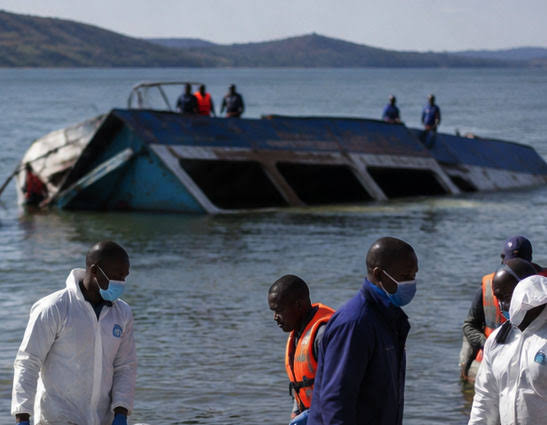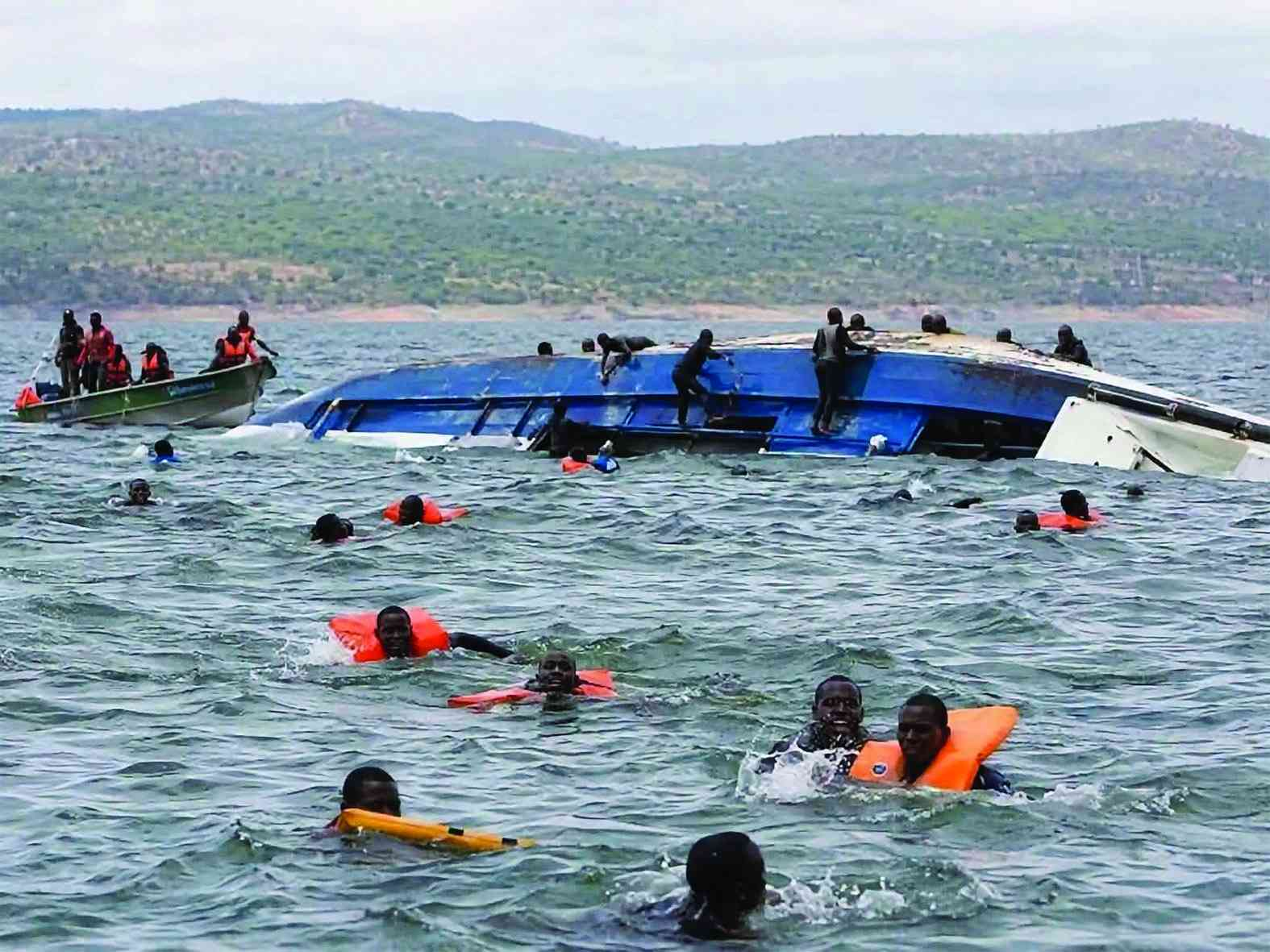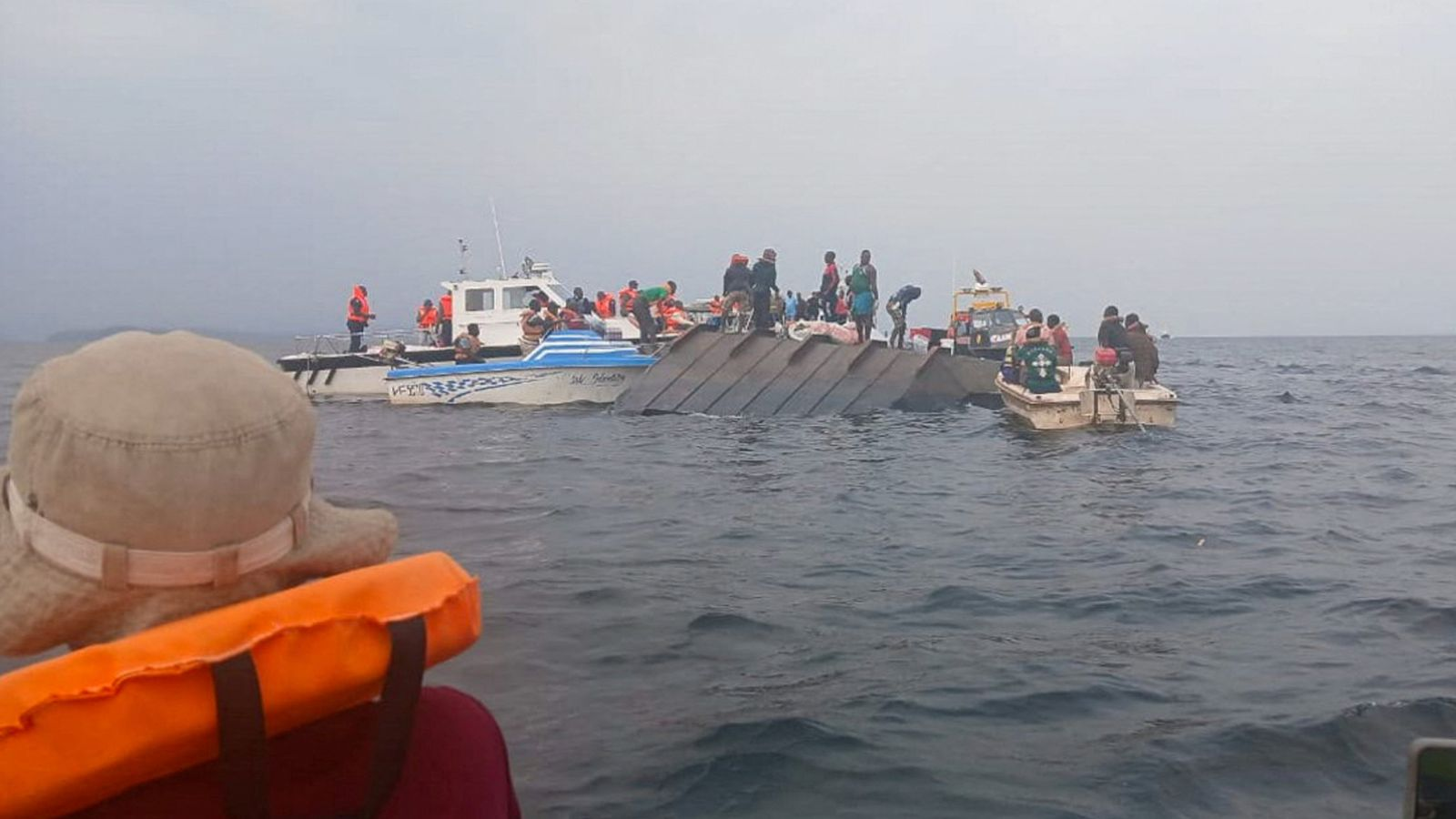
The Rural Infrastructure Development Agency (Rida)-operated ferry, Mbuya Nehanda, which dramatically capsized on Lake Kariba two weeks ago, killing at least 97 people, did not simply capsize, maritime experts and government insiders told The Standard this week, calling for conclusive investigations.
Preliminary assessments by a string of experts suggest that the vessel, which has been traversing Lake Kariba since 1985, may have gone down at the end of a chain of decisions, certifications, warnings, controls, and institutional responsibilities that were supposed to prevent precisely such a disaster, our investigation revealed.
Maritime experts queried the vessel's loading configuration in separate interviews with The Standard.
"The safe operating condition depends on the vessel’s total displacement and the magnitude and distribution of all loads aboard, including passengers, vehicles, cargo, fuel, stores and equipment," one Ministry of Transport expert said, speaking on condition of anonymity.
"Those loads influence the vessel’s draught, trim, freeboard, reserve buoyancy, centre of gravity, metacentric height and righting-arm characteristics."
Two weeks after the tragedy, the questions facing Zimbabwe's official inquiry are, therefore, much larger than whether the late captain Sign Patsikadova, who skippered the vessel on the fateful day, made a fatal navigational error.
These questions go to the heart of the country's maritime safety system.
For instance, the experts said members of any inquiry may quiz officials to explain several grey areas.
- Bulls to charge into Zimbabwe gold stocks
- Jet opens 33rd branch in Avondale
- Film Fellowship embarks on #FilmFridayPodcast
- Out & about: TGIF breast clinic opens in Nigeria
Keep Reading
Who certified the vessel? Who established that it was seaworthy? Who assessed its stability and carrying capacity? Who certified the captain?
Who was monitoring navigation on the lake as Mbuya Nehanda set sail to Chalala, about 80 kilometres south-west of Kariba, on the day tragedy struck?
Who was responsible for communicating the approaching Binga Wave, which slammed into the overloaded ferry hours into its trip?
Perhaps most critically, experts said any commission set up to probe the tragedy must dig deeper to expose what happened to the warnings and reforms proposed years before the ferry sank.
Indications are already clear that it is set to be a high-profile inquiry.
"Zimbabwe has drafted in South African and Tanzanian experts to investigate the accident. Britain has offered to assist in the probe. The manufacturer will help piece together the accident and ascertain what caused the ferry to sink," diplomatic sources told The Standard recently.
The Standard’s investigation has established that Zimbabwe's Inland Waters Control system was already facing serious questions long before Mbuya Nehanda left port.
A 2019 assessment by the International Maritime Organisation (IMO) found deficiencies in the country's maritime capabilities.
Among the most disturbing findings was that Lake Navigation Control personnel told the assessment team they had never received relevant maritime search-and-rescue training, despite previously having been called upon to assist in marine casualties.
That finding changes the nature of the Mbuya Nehanda tragedy.
If the state knew years ago that specialised personnel lacked critical maritime rescue training, then the issue is no longer simply whether an individual failed on the day.
It is whether the system itself was allowed to remain vulnerable.
The answer matters because Inland Waters Control is not merely another government department; it is the technical safety arm responsible for functions including vessel surveys and certification, navigation control, operator competency, and technical enforcement.
Its responsibility, therefore, begins long before a captain takes the controls. It starts with determining whether the vessel should be sailing at all.
Experts who spoke to The Standard said investigators must establish when Mbuya Nehanda was last subjected to a comprehensive hull inspection, whether corrosion or structural defects were identified, what repairs had been undertaken, and whether the vessel's survey records accurately reflected its physical condition.
"For a ferry operating under mixed loading conditions, passenger capacity cannot be assessed as an isolated number," the expert said.
Experts also said investigators must reconstruct the ferry's stability.
That means determining its freeboard, reserve buoyancy, displacement, centre of gravity, metacentric height, righting ability, and the effect of free-surface water.
Those technical terms matter because a vessel can remain afloat while becoming dangerously unstable, according to one of the experts.
The investigation must, therefore, establish not merely how many people and how much cargo were aboard, but whether the ferry's loading was within an independently verified safe limit, and whether its stability calculations reflected its actual operating condition.
A Ministry of Transport official, concerned about the state of affairs in Zimbabwe's maritime sector, said the inquiry should trace the entire regulatory chain — from the surveyor who examined the vessel, to the official who certified it, to the personnel responsible for navigation control, to the officer who certified the captain.
"Every failed link brings the passengers closer to catastrophe," he said.
The weather question will be equally important.
Experts said if the Binga Wave was developing when the ferry departed, investigators must establish whether that information reached the navigation authorities, whether it was communicated to the captain, and whether the captain acknowledged receiving it.
Such evidence should not be reconstructed from memory, one expert warned.
Control-tower logbooks, radio communications, meteorological bulletins, and departure records should provide the answer.
However, it has emerged that many crucial records were not available.
The captain's competence must also be independently tested, insiders said, but they are also worried about the lack of implementation of proposed reforms.
"A government-requested IMO assessment identified institutional and technical capacity weaknesses within Inland Waters Control and recommended strengthening the department with personnel possessing the required skills and competencies, filling vacant technical posts, applying internationally recognised minimum qualifications for key staff such as surveyors and examiners, and providing specialised maritime training and capacity building," official documents showed.
According to insiders, very few of these reforms were implemented.
Investigators should obtain the complete certificate-of-competency file, including examinations, practical assessments, examiner recommendations, employment history, and safety records, experts advise.
Even if the captain is ultimately found to have made an error, that should not close the investigation, one expert noted.
A properly functioning regulatory system is designed precisely because humans make mistakes.
It is supposed to create layers of protection so that one mistake does not become a mass-casualty event.
This is why the most uncomfortable question remains whether Zimbabwe had those protective layers in place.
Experts said the inquiry must establish what became of the IMO proposals.
Who approved them? Who was responsible for implementation? Which were abandoned, and why?
The same scrutiny should be applied to the restructuring of Inland Waters Control.
If the institutional changes weakened specialist accountability, reduced technical capacity, or left key positions occupied by inadequately trained personnel, that would represent far more than an administrative problem, they warned.
"It would be a safety problem,” an expert said.
"The allegations surrounding appointments and progression within the department must consequently be tested against official records rather than political claims or speculation.
The same applies to allegations of favouritism, corruption, and regulatory capture.
These are serious claims, and every person named must be given an opportunity to respond.
Yet they cannot simply be dismissed without rigorous examination.
The tragedy also exposes another uncomfortable paradox.
At the precise moment the State's formal safety architecture
was most needed, it was an ordinary woman, carrying her child on her back, who reportedly plunged into the waves and helped save lives.
Her courage deserves recognition. Yet her heroism should not allow the country to miss the deeper lesson: passengers should not have to act as their own rescue service.
The woman who swam through the waves to save fellow passengers demonstrated extraordinary bravery, but the system that was supposed to protect them must now demonstrate accountability.
The central question facing the inquiry is, therefore, simple: "If every responsible person and institution had performed their duties properly, would Mbuya Nehanda have capsized in the first place — and would so many people have died?"
If the answer is no, investigators must identify the precise point at which the safety system failed.
"That is the investigation Zimbabwe now needs," one of the experts said.
While Mbuya Nehanda may have gone down in minutes, "the system that allowed the risks to accumulate may have been failing for years," one of the experts noted.