A United Nations investigation into operations of vessels on Lake Kariba in 2019, done at Zimbabwe’s request, exposed shocking dangers facing thousands of people sailing the waterbody daily, warning that “in the event of an emergency the passengers will be on their own.”
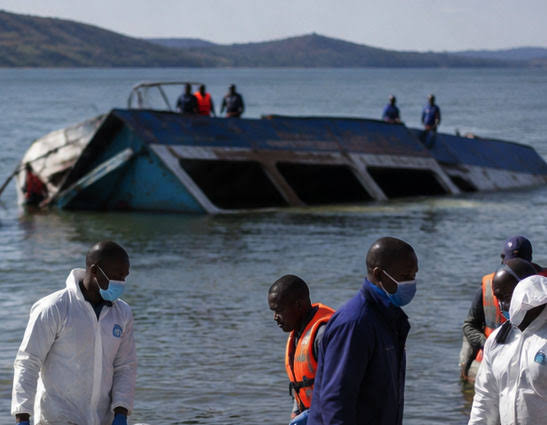
The details, contained in a 65-page UN paper exclusively obtained by The Standard, emerged as the death toll from the Mbuya Nehanda ferry disaster neared 100 on Saturday.
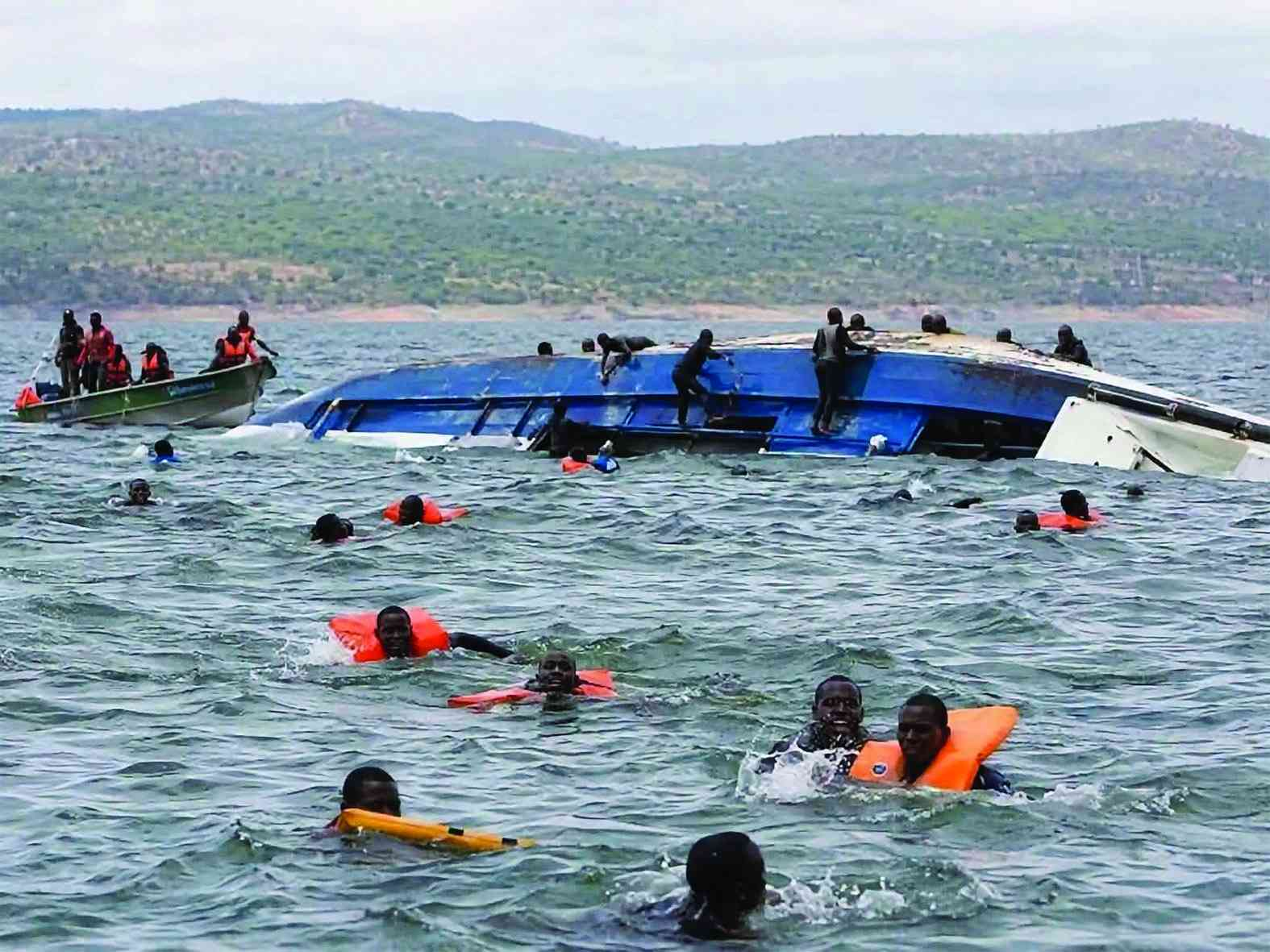
The massive state-run passenger and cargo ferry failed in the middle of the lake two weeks ago after encountering heavy storms as it battled to sail to Chalala from Kariba, some 80 kilometres to the south-west.
The International Maritime Organisation’s (IMO) findings were part of a cluster of concerns raised at the time, which exposed how vital maritime roles were being manned by either unqualified individuals or social science graduates in the Ministry of Transport and at Lake Navigation Control.
Crucially, the IMO investigators took exception upon arrival at Lake Kariba after discovering that the system lacked “any organised maritime search and rescue system despite the high number of passengers in leisure cruise vessels operating in the lake.”
The IMO told authorities that people’s lives were in grave danger after examining data from the Inland Waters Control Department.
This data showed a high density of vessels and a “vibrant maritime industry” demanding more than piecemeal operational standards.
At the time, the lake had 11 000 privately used vessels of under nine metres, along with 4 500 vessels of more than nine metres and 3 290 commercially operated vessels, of which 480 were fishing rigs.
- ‘Binga not fully marketed’
- Increased poaching in Kariba threatens fish farming
- Kariba fishing tourney breaks with tradition
- Feature: Villagers brace for another displacement. This time, It’s for coal
Keep Reading
The report was particularly damning regarding the popularity of luxury boats among schoolchildren during holidays.
“The private harbour representatives, who represent a large number of vessel owners, also lamented the lack of an organised search and rescue system, which meant that in the event of an emergency the passengers will be on their own,” the IMO warned.
“The mission did not find any organised maritime search and rescue system despite the high number of passengers in leisure cruise vessels operating in the lake.
“The team was informed that issues of disaster coordination lay with the ministry of interior, which included the armed forces of the country.
“It was not clear what might happen if there was an incident requiring search and rescue in the lake.
“Vessel operators interviewed confirmed that in the event (of an incident), they would raise the control tower manned by the department.
“The visit by the mission to the control tower did not establish availability of documented arrangements or plans for conduct of maritime search and rescue.”
The revelations raise fresh questions over the government’s preparedness to deal with major maritime disasters, particularly after authorities appeared to struggle to mount an effective rescue operation following the Mbuya Nehanda tragedy.
In the aftermath of the ferry accident, authorities have defended their positions and shifted the blame onto the captain, who also perished.
Zimbabwe has been under close global scrutiny as observers seek to understand why the ferry was overloaded and why Lake Navigation cleared the trip even as heavy storms mounted.
Answers to these questions lie partly in the UN report, which criticised the government for managing the lake with inadequate weather-monitoring equipment.
During the rescue operation that followed, it became clear that the authorities were ill-equipped to manage a lake of this magnitude.
Government insiders said almost all recommendations in the report had gone unimplemented.
The IMO itself censured Zimbabwe for failing to implement recommendations contained in an earlier report issued in 2000.
“The mission established that there was limited number of aids to navigation with one such an aid in the entrance of Kariba harbour,” it said.
“Interviews with the crews and the staff of the department pointed out that a challenge with maintenance of the aids to navigation exists in the dam possibly due to lack of assigned responsibility for maintenance of the aids to navigation.”
The mission also found disturbing weaknesses in vessel operations.
“(At one ferry), the team also learned that the person in charge of deck operations was also in charge of engine operations,” the report added.
“It was not clear how he would manage the two roles when the vessel was in operation.
“The team also established that though the Inland Water Regulations required the vessel to maintain a log book the sample provided did not meet the minimum requirements provided.”
In the Mbuya Nehanda disaster, the report noted that such logs were also not maintained, and the ferry traversed the lake without speedboats in tow, which are vital during emergencies.
The control tower was similarly compromised.
“The staff (at Lake Kariba Navigation Control Tower) confirmed to the team that they had received in-house training on the functions they were performing,” the report said.
“The personnel confirmed to the team that they had never received any related training on maritime search and rescue though in the past they had been called upon to assist in marine related casualty.
“The centre did not have any operational plan which the operators could rely in coordinating such an operation.”
The mission also met with harbour staff, including the harbour master, who outlined their challenges and expectations of the maritime administration.
Among their concerns was the absence of documented standards for safety equipment to be enforced by the department and the government.
“Taking into consideration the mandate of the Department of Inland Waters Control Department, the mission finds that the current strength of manpower may not be able to adequately perform all the functions.
“Data provided by the human resource section revealed that of the 61 posts approved… only 19 have been filled.
“Further, qualification criterion obtained revealed that although a specialisation in marine engineering is prescribed as one of requirements to fill the posts of surveyors, examiners and chief harbour master, in practice the posts were filled with persons holding a degree in social sciences.”
The report noted that there was a wide variety of life-saving equipment available on the market, resulting in some vessels acquiring substandard gear.
It added that while the 1971 regulations provided requirements for life-saving equipment based on vessel length and carrying capacity, there were no documented standards for safety and firefighting equipment.
The control tower, meanwhile, was operating with inadequate communications.
The Inland Waters Control Department operated a control tower in a strategically elevated location, giving it an unusually long-range communication capacity through VHF radio, the report said. It added that the system was inadequate to provide full coverage of the lake.
“The mission finds that the provisions of the regulations in relation to radio communications are not being implemented and there is no all round the clock monitoring of the radio communication by the tower,” the report concluded.
“The radio communication equipment provided by the tower and fitted on most of the vessels visited did not provide full coverage communication for a vessel sailing from Binga to Kariba.”
Transport and Infrastructure Development minister Felix Mhona (pictured below) had not responded to questions sent to him by the time of going to print.