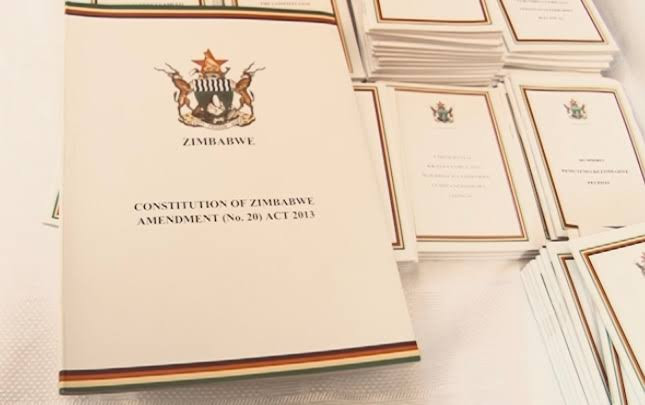
Thirteen years after Zimbabweans overwhelmingly adopted a new constitution in 2013, the promise of devolution remains unfulfilled, while controversial amendments to extend President Emmerson Mnangagwa’s term have been implemented with haste.
Provincial and Metropolitan Councils, envisioned as engines of grassroots development and participatory governance, exist only on paper, their elected councillors still unable to assume office nearly three years after the August 2023 elections.
The councillors were elected under proportional representation.
The councils were meant to be set up under the Provincial and Metropolitan Councils Administration Bill, which seeks to align the older Provincial Councils and Administration Act with the 2013 constitution and operationalise government devolution. It was gazetted in 2021.
The delay in fast-tracking the Bill has exposed what critics call a “chameleon-like” approach to constitutional implementation, where there is urgency for some reforms and paralysis for others.
The Bill proposed the setting up of eight provincial councils—Mashonaland Central, Mashonaland East, Mashonaland West, Manicaland, Masvingo, Midlands, Matabeleland North, and Matabeleland South—with Bulawayo and Harare becoming metropolitan councils.
Under these provisions, senators and legislators were supposed to sit in the provincial and metropolitan councils.
Section 270 of the constitution stipulates the roles of Provincial and Metropolitan Councils.
- Mr President, you missed the opportunity to be the veritable voice of conscience
- ED to commission new-look border post
- Zanu PF ready for congress
- EU slams Zim over delayed reforms
Keep Reading
Their roles include planning and implementing social and economic development activities, and bringing governance closer to the people.
The country currently only has Provincial Affairs and Devolution minister, but operates without the provincial and metropolitan councils.
Without enabling legislation, however, these councils remain a constitutional promise gathering dust.
Elected councillors from the 2023 harmonised elections have been left in limbo, their mandates constitutionally recognised but functionally impossible to exercise.
The government has cited the absence of an enabling Act as the legal barrier, but critics argue the real obstacle is political inertia.
“Devolution is not optional; it is a constitutional imperative,” councillors affected by the delays said.
“Zimbabwe cannot afford further delay. Communities deserve empowered councils, accountable governance, and development driven from the grassroots up.”
They argued that the slow pace of devolution stands in sharp relief against the speed with which other legislative priorities have been advanced.
Constitutional Amendment Act No. 3 (CAA 3) was rushed through Parliament and signed into law with speed, despite legal challenges and concerns over public consultation.
Critics have said even more telling is the recent appointment of 10 senators and judges by Mnangagwa, a move that “demonstrates how swiftly action can be taken when political will exists.”
These appointments of senators and judges were made under the contested new constitutional framework that activists accuse the government of selectively implementing.
“If the government can mobilise urgency for amendments and appointments, why not for devolution? Why not for the Provincial Councils Act?” the councillors added.
The failure to operationalise devolution is not a new complaint.
In 2021, civic organisations noted that provincial councils were still not operational, expressing guarded optimism that legislation would materialise “any day now.”
That optimism has since curdled into frustration.
Without an enabling Act, there is no legal framework for the councils to function.
No budgets can be allocated, no staff can be recruited, and zero development plans can be executed at the provincial level, leaving communities without the localised decision-making that devolution was meant to deliver.