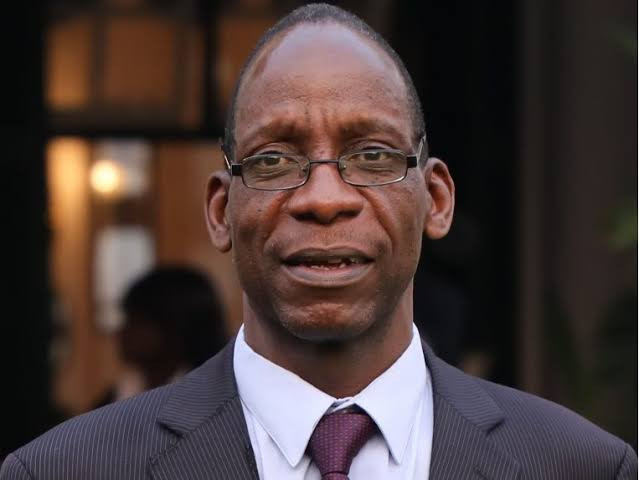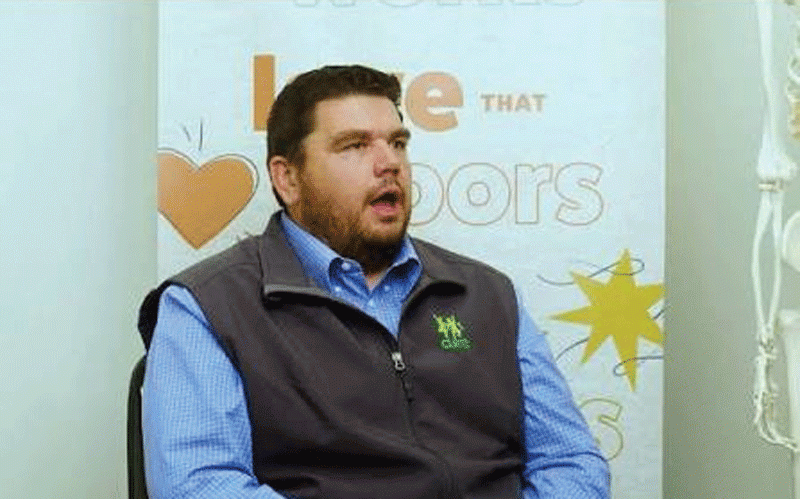
IN this exclusive interview, Alpha Media Holdings chairman Trevor Ncube (TN) sits down with Bulawayo native Jonathan Simpson (JS), the executive director of Cure Children’s Hospitals of Zimbabwe as part of the In Conversation with Trevor Bulawayo Series.
Launched in 2021 during the Covid-19 pandemic, this pioneering institution has beautifully transformed a fire-damaged, condemned hospital site into a modern sanctuary of healing.
Focusing on pediatric orthopedic and reconstructive plastic surgery, Cure restores hope and dignity to thousands of vulnerable children.
Simpson reflects on his unique background in spatial mapping, his deep-seated family roots in Bulawayo, and how their historic public-private partnership is training future surgeons to deliver life-changing, entirely free medical care
TN: Greetings, and welcome to In Conversation with Trevor, Bulawayo Series, brought to you by Heart and Soul Broadcasting Services.
Today, I'm in conversation with Jonathan Simpson, the executive director of Cure Children's Hospitals of Zimbabwe. If you enjoy this conversation, please remember to subscribe, like, and share. Let's get down to some work. Tell me, what is Cure Children's Hospitals in a nutshell, so that our viewers understand what it is you do?
JS: On the surface, we look like a hospital, and we are a hospital but we are so much more than that. At the end of the day, we are an institution that wants to bring hope, healing, and dignity to the children of Zimbabwe.
We focus on pediatric orthopaedic and plastic reconstruction. These are the thousands of Zimbabwean children who were born with a condition and have never had the surgery they need to live a fulfilling, productive life, or to be part of society. There's so much that we do beyond just the medical.
- In Conversation with Trevor: Chisamba: Let’s be proud of ourselves
- Goblins ‘besiege’ school
- Biti assault case : recusal application ruling date set
- In Conversation with Trevor: ‘I tried to change Zanu PF from within’ – Margaret Dongo
Keep Reading
TN: How long have you been running?
JS: We opened in 2021, during Covid, so we've been going for about five-and-a-half years now.
TN: Great work that you're doing. We've walked around and seen what you're doing. But I want to understand the man, Jonathan himself. Where were you born? Where were you raised?
JS: I was born maybe two miles down that way, at Mater Dei Hospital. My parents live in Matsheumhlope, just down the road. I went to school here in Bulawayo — Whitestone for junior school and then Christian Brothers College for high school. Then I went to Rhodes University in South Africa. So very much local. My family's been here for many, many years.
TN: Your family has been here since 1895. That's a strong heritage. Talk to me about that pedigree.
JS: "Pedigree" is a compliment, for sure. The original Simpsons came as part of that initial pioneer stock that came up through South Africa into Zimbabwe in 1895. They settled near Turk Mine, just outside town, and were mining there for a number of years, a few generations, before eventually moving into town. Our family's been here ever since. My father has been in mining his whole career.
TN: Interesting that medicine is not what you're trained to do. Explain your qualifications and how they contrast with what you do here daily.
JS: It's a long story. On the surface, it might seem strange. When CURE was setting up this hospital, they wanted people who understood the Zimbabwean context — running an organisation in Zimbabwe is a unique environment.
I studied geographical spatial development at university — a lot of work with GIS, geographical information systems. That's about solving problems using mapping. My first jobs were with World Vision in Pakistan, determining the best places for food distribution points; in Haiti, setting up systems to map where we were working and reporting what we were doing.
The world of GIS is about looking at the world in context. You don't just say, "We'll do a food distribution point here." You ask: How far is it? Are there tar roads? Rivers? Can people access it? You're always looking at the context of the problem. That takes you into holistic management and problem-solving.
From those early jobs, I worked for an organisation called Tearfund, a British organisation, doing monitoring, evaluation, strategy, and impact work across 12 countries — from Somaliland down to Zimbabwe. That covered everything from borehole drilling to agricultural projects, women's savings and loans groups, empowerment, gender work, and working through the church. Quite a diverse environment.
TN: Which prepared you for what you're doing now. When the job presented itself, what frightened you about the offer, and what drew you to it?
JS: Initially, there was hesitation — even a dismissal. I thought, "I barely passed O-Level biology. What can I add?" But as I researched the organisation and spoke to people within it, I realised I had more to offer. CURE has some of the world's most amazing surgeons, and their skills belong in the OR. That's their comfort zone. The last thing you want to do is draw a surgeon out of their area and put them in a management position.
It's been a radical learning curve in terms of watching surgeries and listening to the medical side, but the outreach, church work, and community programMEs are much more familiar to me.
TN: I get a sense that you have to be humble. Your faith is pulling you towards learning. Is that what I'm hearing?
JS: Yes. It was a scary time for sure. But I have always been fully convinced that I was called to stay in Bulawayo — Zimbabwe, at least. My wife and I have never really had any desire to leave. For many years, we would sit and talk, and I would pray: "Lord, if you've given me these skills and abilities, what can I actually do? What exactly do you want from me?" With everything going on around me, I started to doubt whether that was possible – whether something like this would ever come up.
I know I'm not the only one. There are many of us working here where this is our dream job. We get to provide hope and healing to children every day. We may have frustrating Zoom calls or budget meetings, but at the end of the day, we can come and spend time with our patients, talk to the mothers, and be reminded of why we do this. That is a big driver.
TN: Why Bulawayo? Why not Harare? This is a big, innovative institution. Why was it a good fit that it should be in Bulawayo?
JS: We are often asked that. There are many factors. We looked at different possible locations for a while, and we've also seen in some of our other countries that the capital already has some level of medical capacity. So it makes sense to decentralise. The way we work, it's better to be outside the capital.
Our work is entirely elective — we don't do emergency surgeries. Every surgery done here is planned, so we don't need to be part of the trauma side of medicine. Also, this institution used to be the infectious diseases ward of UBH — the Robbie Gibson Infectious Diseases Ward. Sadly, in 2013, there was a fire and most of the premises burnt down. So this was actually a condemned site from 2013 to 2017. We signed our MOU with the Ministry, and that kickstarted our renovate, operate, and transfer partnership — a unique partnership between the private sector, donors, and government.
TN: How does that work?
JS: The conversation started between us and the Ministry around the need to kickstart and catalyse training for orthopaedic and plastic reconstruction in the country — which wasn't structured or formalized at the time.
The bigger need was the hundreds of thousands of children who need surgeries. So we said, "Let's renovate existing buildings, build from scratch, and plan for the future." If we walk around, I can show you buildings that are 100 years old, seven years old, three years old, and six months old — and we've got two building projects about to start.
The idea is to get this institution to modern standards and capacity. We run it, but it's not just about service delivery — it's also about training.
Our mandate with the Ministry is to do 500 free surgeries a year. Last year we did 1 600 – we're already exceeding our target. The other aspect of the MOU is training. We have millions of children in this country, but we only have two pediatric orthopaedic surgeons and just a handful of plastic surgeons. To truly tackle this issue, we need much more structured training programmes.
We work with organizations like the Zimbabwe Orthopaedic Association. We take in residents and HMOs – junior doctors on their path to becoming surgeons – for three-month rotations. They work with our surgeons. The earlier you catch a surgeon and inspire them to go into reconstructive or pediatric orthopaedic surgery, the more they get invigorated by the thought: "This is a career. I can help heal children."