There is a saying in engineering that a system can only perform as reliably as its weakest component.
We spend countless hours designing redundancy, improving reliability, analysing failure modes, and building resilience because we understand one fundamental truth: consistency is what keeps systems operating.
The same principle applies far beyond substations, transmission lines, and power stations. It also applies to leadership, institutions, and national energy policy.
One issue that continues to concern me across much of Africa is what I describe as the revolving door within the energy sector.
Every few years, people change.
Leadership changes. Priorities change. Projects are redesigned.
Strategies are rewritten. Institutions begin new plans before previous ones have matured.
Technical teams are restructured. Institutional memory disappears, and in many cases, progress starts all over again.
- Coal crisis pegs back power generation
- Coal crisis pegs back power generation
- No funding for power imports: Minister
- Zesa pays US$5m to Moza to mitigate power crisis
Keep Reading
This cycle is one of the most expensive forms of inefficiency that rarely appears on a balance sheet.
As an electrical engineer who has spent years working with power systems, high-voltage infrastructure, and energy development, I have come to appreciate that electricity rewards patience, discipline, and long-term thinking.
A power station is not built in a year. A transmission corridor is not designed overnight. Grid expansion cannot be achieved through short-term decisions. Reliable electricity requires planning that stretches decades into the future.
Unfortunately, political and institutional cycles often operate on much shorter timelines than engineering realities.
Energy infrastructure is unlike many other sectors. Decisions made today may still be influencing economic growth fifty years from now.
A transformer installed today may continue serving communities for more than three decades.
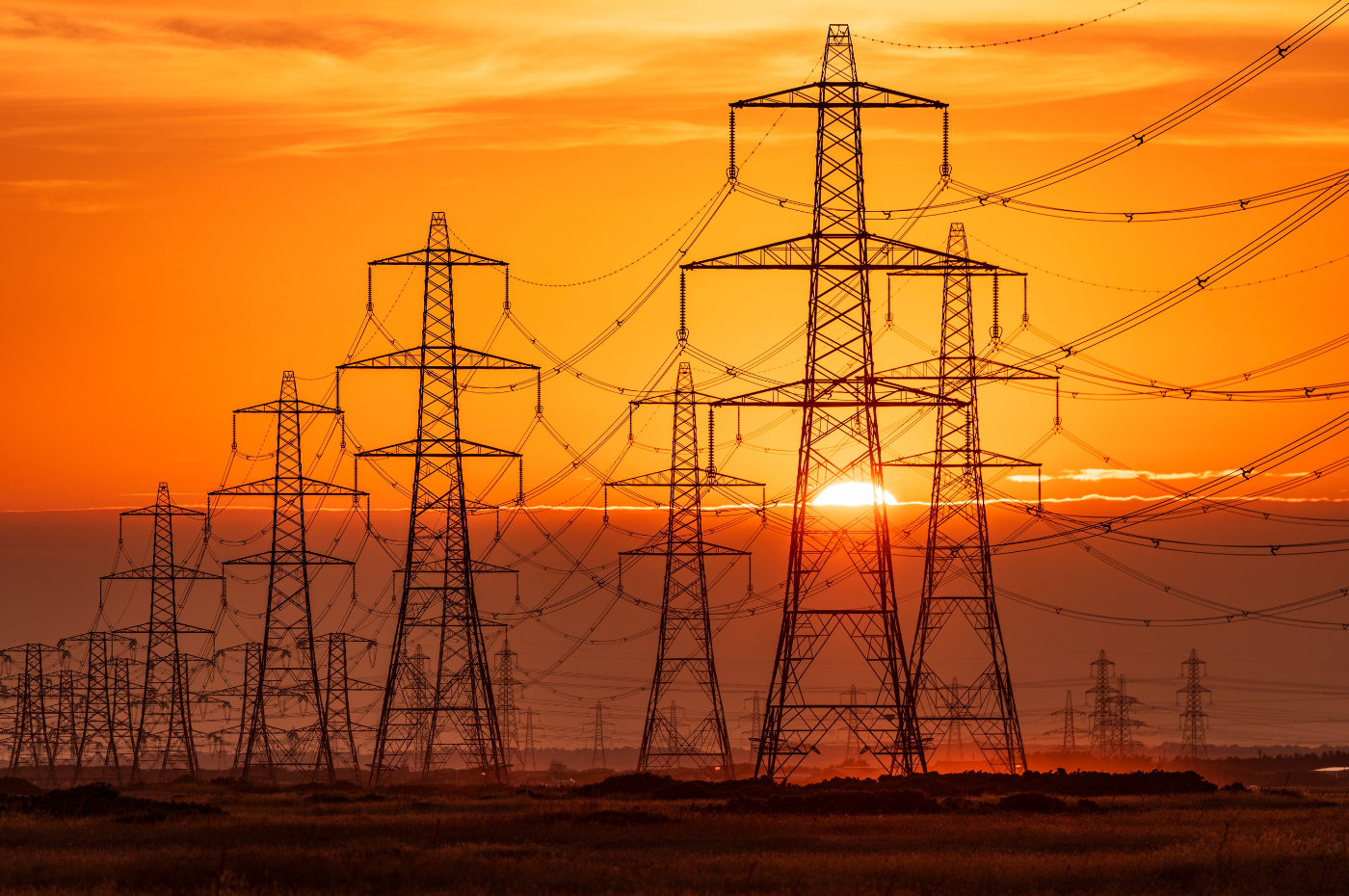
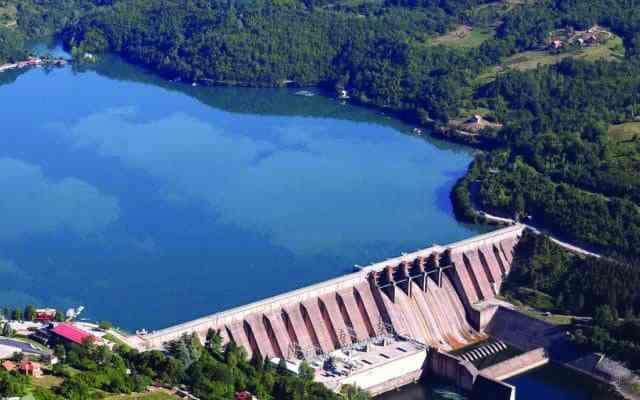
Transmission infrastructure often lasts even longer with proper maintenance. Hydroelectric stations can operate for generations.
This means every decision must be based on continuity rather than constant reinvention.
As engineers, we never redesign an entire power system simply because a new engineer joins the project. We review existing designs, identify weaknesses, improve performance, and build upon what already works. That is how engineering evolves. We respect previous work while improving it.
Perhaps our institutions should adopt the same philosophy.
Across Africa, we often celebrate launching projects. We hold ceremonies when agreements are signed. We announce ambitious energy targets and unveil impressive strategic plans. These moments are important because they inspire confidence and demonstrate commitment.
However, investors, development partners, engineers, and ordinary citizens are not ultimately interested in announcements.
They are interested in completion.
They want to see transmission lines carrying electricity.
They want to see substations energised.
They want to see solar plants connected to the grid.
They want to see industries operating with reliable power.
They want results.
One of the greatest strengths of successful electricity systems around the world is institutional continuity. Policies evolve, technologies improve, leadership changes, but the long-term national energy vision remains remarkably stable.
Projects continue regardless of who occupies offices because everyone understands that electricity is too important to become hostage to administrative changes.
Africa deserves that same level of consistency.
Our continent is blessed with extraordinary energy resources. We have some of the world's highest solar irradiation levels. We possess enormous hydroelectric potential. We have natural gas reserves, geothermal resources, wind corridors, biomass opportunities, critical minerals required for the global energy transition, and perhaps most importantly, an increasingly educated generation of African engineers.
The problem has never been a shortage of opportunity.
Too often, it has been inconsistency in execution.
As someone deeply involved in the energy sector, I often remind young engineers that reliability is not an accident. In electrical engineering, reliability is designed into every system. We install protection schemes because faults will occur. We create redundancy because equipment sometimes fails. We maintain reserve margins because demand changes unexpectedly. Every decision anticipates the future rather than reacting to it.
That mindset should shape how we govern the energy sector.
Imagine if every African country developed a national energy master plan with a thirty- or forty-year horizon that remained technically sound regardless of changes in leadership. Imagine if every incoming administration viewed itself not as beginning a new journey but as continuing an existing national mission. Imagine how much faster projects would move if institutions focused on continuity instead of restarting.
That is how energy security is built.
One lesson I have learned from studying electrical power systems is that stability creates confidence. Investors commit capital where systems are predictable. Engineers perform better where technical standards remain consistent. Manufacturers expand production where electricity supply is dependable. Financial institutions lend more confidently where infrastructure projects are protected from unnecessary uncertainty.
Stability is not only an engineering principle.
It is also an economic principle.
The private sector has an equally important responsibility. Businesses must invest with a long-term perspective rather than seeking only short-term opportunities. Engineering firms should invest in developing local technical expertise instead of relying excessively on imported skills. Universities should continuously strengthen research that addresses African energy challenges. Financial institutions should understand that infrastructure financing requires patience because returns are realised over many years.
Building an energy-secure continent demands collaboration that extends beyond election cycles, board appointments, or organisational restructuring.
Knowledge continuity is another area that deserves greater attention.
Across Africa, many experienced engineers retire with decades of invaluable technical knowledge that is never adequately transferred to younger professionals. Institutional memory quietly disappears. Lessons learned from previous projects are forgotten, forcing new teams to repeat avoidable mistakes.
In engineering, we document everything because future engineers depend on today's records. Every drawing, calculation, protection setting, commissioning report, and maintenance history becomes part of the system's intelligence.
We should treat institutional knowledge with the same level of discipline.
Mentorship should become a strategic priority across Africa's energy sector. Every senior engineer should deliberately prepare the next generation. Every utility should establish structured succession programmes.
Universities and industry should strengthen partnerships that ensure graduates leave with practical skills alongside academic qualifications.
Africa's greatest energy resource may ultimately be its people.
The ongoing global energy transition also presents Africa with a remarkable opportunity.
As countries invest in renewable energy, battery storage, smart grids, hydrogen technologies, electric mobility, artificial intelligence, and digital infrastructure, Africa should position itself not merely as a consumer of imported technologies but as an active contributor to innovation.
This requires consistent policies that encourage research, local manufacturing, technology transfer, engineering excellence, and private investment over many decades.
No serious investor builds billion-dollar infrastructure based on uncertainty.
They invest where they see continuity.
Climate change further reinforces this need for long-term thinking. Hydroelectric systems must adapt to changing rainfall patterns. Transmission networks must become more resilient against extreme weather events.
Renewable energy integration requires sophisticated grid planning. Battery storage demands new operational strategies. None of these challenges can be solved through fragmented planning.
Engineering solutions require continuity.
As the doctor of Electricity, I often say that electricity is one of humanity's greatest examples of invisible teamwork. Every time someone switches on a light, thousands of people have already contributed to making that moment possible. Engineers designed the system. Technicians installed equipment. Operators balanced generation. Protection engineers ensured safety. Maintenance teams preserved reliability. Planners forecast demand years in advance.
No single individual powers a nation.
Systems do.
Perhaps this is the greatest lesson Africa's energy sector can embrace.
Strong institutions are more important than strong personalities.
Reliable systems are more valuable than temporary successes.
Long-term vision will always outperform short-term reactions.
If we are serious about industrialisation, regional integration, digital transformation, mineral beneficiation, electric mobility, artificial intelligence, modern healthcare, and sustainable economic growth, then we must first build energy institutions capable of delivering continuity.
Africa cannot afford revolving doors where every transition resets progress.
We need revolving turbines, not revolving policies.
We need continuity of purpose, consistency of investment, stability of regulation, preservation of institutional knowledge, and confidence that today's projects will still be national priorities tomorrow.
Future generations will not ask who chaired meetings or who launched projects.
They will ask whether we built the infrastructure that transformed Africa.
The engineers of tomorrow will inherit the systems we design today.
The investors of tomorrow will judge the confidence we create today.
The industries of tomorrow will depend on the decisions we make today.
Let us therefore build an energy sector where progress moves forward instead of in circles.
Let us replace revolving doors with enduring institutions.
Let us protect technical knowledge, nurture engineering excellence, and maintain policies that outlive individuals.
Because electricity flows best through stable networks.
Nations grow best through stable institutions.
And Africa's energy future will be secured not by constantly starting over, but by consistently moving forward together.
*Dr Engineer Edzai Kachirekwa is an energy expert, high-voltage electrical engineer and infrastructure strategist. He is widely known as “The Doctor of Electricity”.