WHEN Tavengwa Mukuhlani took the helm of Zimbabwe Cricket (ZC), the entity was drowning in debt and doubt.
But with his diplomatic prowess and cricketing vision, he has transformed the sport in Zimbabwe, paving the way for a brighter future.
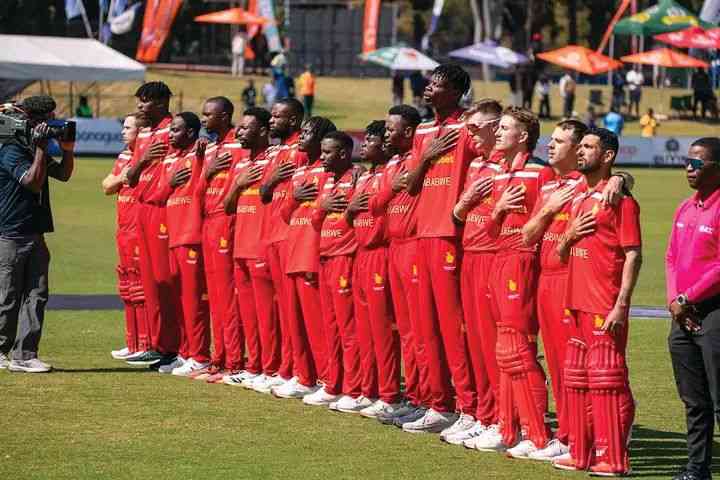
Zimbabwe hosts the Under-19 Men's International Cricket Council (ICC) World Cup for the first time in history, something that was unthinkable eight years ago when ZC was being choked by a US$22 million debt that threatened its very existence.
There was even talk of ZC's suspension by the ICC at the time, but the proposal sent to the ICC by Mukuhlani's board on how they intended to service their debt was accepted, and they stuck to their end of the bargain.
Mukuhlani has served as the chairperson of the Mashonaland Cricket Association, now Harare Metropolitan Province.
He was first elected as ZC board chair in 2015 at a very difficult time and had to deal with the mess left by those before him. He may have had an idea about what he was getting into, but once he got the full picture after he got elected, it looked like, even with the best captain in the land, the ship was still going to sink.
But he accepted the challenge of steering it away from the murky waters of insolvency. He just rolled up his sleeves and got down to work but suffered a big setback from the Sports and Recreation Commission (SRC), the government arm in sport, which, in consultation with the then Minister of Sport Kirsty Coventry, suspended the ZC board, which was seen as government interference by the ICC.
In 2019, when ZC was suspended by the ICC due to government interference, it looked like the game of cricket that we know was done and dusted, but Mukuhlani soldiered on and used his contacts at ICC to plead his case for his motherland.
- In Full: Nineteenth post-cabinet press briefing: July 05, 2022
- Muzarabani eager for Chevrons to qualify for Australia 2022
- R. Kelly sentenced to 30 years in sex trafficking case
- Cops Arrested For USD 10 Fraud
Keep Reading
Fortunately, level heads prevailed, and ZC was reinstated as a full member after three months, after the SRC complied with conditions of non-interference.
When leaders are called upon to lead at such difficult times, their resolve and wits are always tested. Mukuhlani had presented to the ICC board the roadmap on how he intended to take ZC out of the woods but did not let the emotions of the suspension cloud his path to keep his promise to those who put trust and faith in him.
"Turning around Zimbabwe Cricket's finances was a tough challenge, but we took a pragmatic approach. I'm proud to say we've moved from red to black, and our focus now is on building a sustainable future for the sport in Zimbabwe," Mukuhlani told The Sports Hub.
Mukuhlani never listened to naysayers who said he did not play the game, therefore had no right to run it – after all, he was a businessman in his own right, having founded his own pharmaceutical company in Bulawayo.
Cricket is often seen as a relic of colonialism; the sport is played by almost all former British colonies at different levels. The Americans, who rebelled from Britain by creating their own type of English, still do not understand how a game that is played over five days can still end as a draw.
Having played the game helps you understand it better, but not all former players are great coaches or administrators. What Mukuhlani lacked in not having spent time in the middle, he made up for with his sharp business acumen by buying the trust of those at the helm of the world governing body.
Mukuhlani, a pharmacist by profession, which has earned him the nickname 'Doc', as an entrepreneur, understood what debt can do to an organisation and how important working capital is to a business. He also understood that cricket was the product, not administrators; without a product, there is no organisation.
At the policy level, which he heads, hard choices had to be made, restructuring the administration without compromising the product, which is cricket. He did that with aplomb but still understood his limitations during the hard years when money was scarce but still managed to navigate the murky waters.
The late Peter Chingoka and Alywn Pichanick, a former cricketer and one of the best legal minds in the country, advising the board on legal matters, helped the ZC board of the time.
Chingoka, chairperson from 1990 to 2014, navigated the racial integration in the country by making cricket a truly national game in Zimbabwe.
He was the perfect foil for racial integration, having been educated at St George's College, a predominantly white private school, and also having played for Universals Cricket Club, which was a club dominated by people of Asian origin.
For Mukuhlani, it has always been about building on what those who went before him did, without reinventing the wheel; it's about bridging the gaps left after the 2004 rebel saga, that cricket is for all, and every player who wants to play for their country of birth should do so on merit, not based on colour, creed, or political affiliation.
Mukuhlani might have learned one or two things from Chingoka in areas of diplomacy and looking at the bigger picture without clouding himself with personal prejudices.
Chingoka was a wily old diplomat who understood the cricket world's political dynamics. He was there when the England and Wales Cricket Board (ECB) ruled the gentlemen's game, and he was also there when power started shifting towards the Board of Cricket Control of India (BCCI).
The former batsman managed to align with BCCI at the right time and negotiated with them to send an Indian team to play Zimbabwe in white-ball games for three years after the conclusion of the Indian Premier League (IPL).
This not only exposed Zimbabwe to India's young talent, who went on to become global stars, but also boosted ZC's financial coffers, as hosting India is the most profitable for any cricket board.
In 2010, Zimbabwe hosted India and Sri Lanka in a triangular series; young Virat Kohli and Rohit Sharma, who went on to become cricket legends, were part of the India squad that toured Zimbabwe.
The general Zimbabwe cricket fan doesn't care about the politics of the game; all they want is to see their team performing well against the top sides, but a lot happens behind the scenes for fans to watch the best sides tour Zimbabwe.
When the ICC Future Tours Program (FTP) changed from being cast in stone to being one that's negotiated by cricket boards, Mukuhlani sat on the shoulders of Chingoka, whom he had once deputised, to negotiate something that was favourable to ZC under the circumstances.
It is no coincidence that once the ICC stopped drip-funding ZC in 2023, with the organisation now fully in control of its funds, they managed to play 10 Test matches, seven at home in 2025, something that many other established Test nations couldn't do because Test cricket is very expensive to host.
His biggest coup, after months of negotiations, was resuming bilateral tours to England for the first time in 22 years, when they played a one-off four-day Test match at Trent Bridge in May last year.
Under Mukuhlani's stewardship, ZC managed to host ICC global qualifiers for both men and women. A small nation like Zimbabwe, under Mukuhlani's guidance, has become a destination of choice to host major ICC global events and is set to host its fifth major global event in four days' time, when the young men's cricket talent takes to the field for the ICC Under-19 Cricket World Cup.
"Cricket is a game of glorious uncertainties, but one thing is certain - Zimbabwe's passion for the sport is unmatched. We are proud to host the Under-19 Men's ICC World Cup and showcase our nation's love for cricket," Mukuhlani said.
Acting President Constantino Chiwenga described it as a moment that transcends sport and represents excellence, youth empowerment, and enduring global partnership.
“The presence of this trophy on our soil is a powerful symbol of Zimbabwe’s renewed centrality in world cricket and our growing stature on the global sporting stage,” Chiwenga said.
“Beyond being a sporting competition, this tournament reflects the international community’s confidence in Zimbabwe – in our people, our institutions, and our capacity to deliver at the highest standard.”
Next year, the biggest one of them all, the ICC Men's Cricket World Cup, to be co-hosted by Zimbabwe, South Africa, and Namibia, will further cement Mukuhlani's leadership.
"Hosting major ICC events is not just about cricket; it's about building bridges, fostering friendships, and showcasing Zimbabwe's warm hospitality. We are committed to making cricket a sport for all in our nation," he added.
The ICC has also fallen in love with Zimbabwe because of its low cost of hosting and the passionate fans who give a truly African feel to the game. Mukuhlani has previously told global media: "We have proven in recent years that we can host big events well, and the passion of the fans has shown that there's such an appetite for cricket here."
The ZC chairperson has always said that he wants cricket to be the number one sport in the country and overtake football. "We want to continue to host major global cricket tournaments so that the legacy of those tournaments becomes making cricket the most popular sport in the country," he said.
He also wanted the women cricketers in Zimbabwe to be empowered at a global level and fought tooth and nail for the country to get One Day International status in 2021, a status that was granted to all full members except Afghanistan.
As that wasn't enough, despite Zimbabwe having limited success in women's cricket, he made sure that they became part of an expanded 11-team ODI Women's Championship. Zimbabwe had been the only Full Member not part of the tournament other than Afghanistan.
In a couple of months, they'll be flying away to New Zealand to fulfil their ODI Women's Championship fixtures.
The 52-year-old, who has become a key member of the ICC board of directors and is respected by the most powerful cricket board, BCCI, was also instrumental in the inclusion of Zimbabwe, Afghanistan, and Ireland into the World Test Championship and the scrapping of the proposed two-tier system, which would have seen six teams in Division One and six teams in Division Two.
His firm belief that a team can only get better by playing the best was upheld by the ICC through vigorous lobbying on the sidelines of the board of directors' ICC meetings.
Zimbabwe will be part of the Test Championship's fifth edition, which will run from 2027-2029.
Unfortunately, in Zimbabwe, cricket is not viewed in the same lens as in other cricket-mad countries; Mukuhlani would have been seen or honoured at the same level as the sitting head of state because of his services to the game.
Speaking to Mukuhlani, you get the sense of a diplomat and a good negotiator who can read the temperature in the room. He understands the concessions that he needs to make and the non-negotiables but still does it in a diplomatic way, which has seen his stock rise within the ICC.
For one to emerge and be respected on how they manoeuvre boardroom battles at the ICC, it takes more than just representing a cricket board but understanding the nuances and volatile situations that come with being in good books with both the BCCI and Pakistan Cricket Board, who currently do not see eye to eye due to the political rivalries of the two countries.
"Diplomacy is about finding common ground, and in cricket, we have a universal language that unites us. I'm proud to have played a role in bringing Zimbabwe back to the global cricketing fold," said Mukuhlani.
Life moves in full circle; years later, the same Coventry who suspended the ZC board led by Mukuhlani, the most decorated Olympian athlete in Zimbabwean history, was seen at an international cricket event with Mukuhlani and the secretary of the BCCI, Jay Shah, canvassing for votes during the campaign period of the International Olympic Committee campaign period.
Shah, being the most powerful figure in Indian sport, his endorsement for Coventry was very important, and Mukuhlani, being the diplomat who wants the best for his country, facilitated that dialogue. Coventry, in a few months' time, was duly elected the IOC president.
As Zimbabwe savours the hosting of the junior cricket world cup, let us not forget the countless hours put in by men and women to be given the right to host such a prestigious event where new stars are born and go on to become legends of the sport we all love.
Mukuhlani inherited some legacy but wants his legacy to be that of having found the books in the red but leaving them in the positive.