Politics is the struggle for state power.
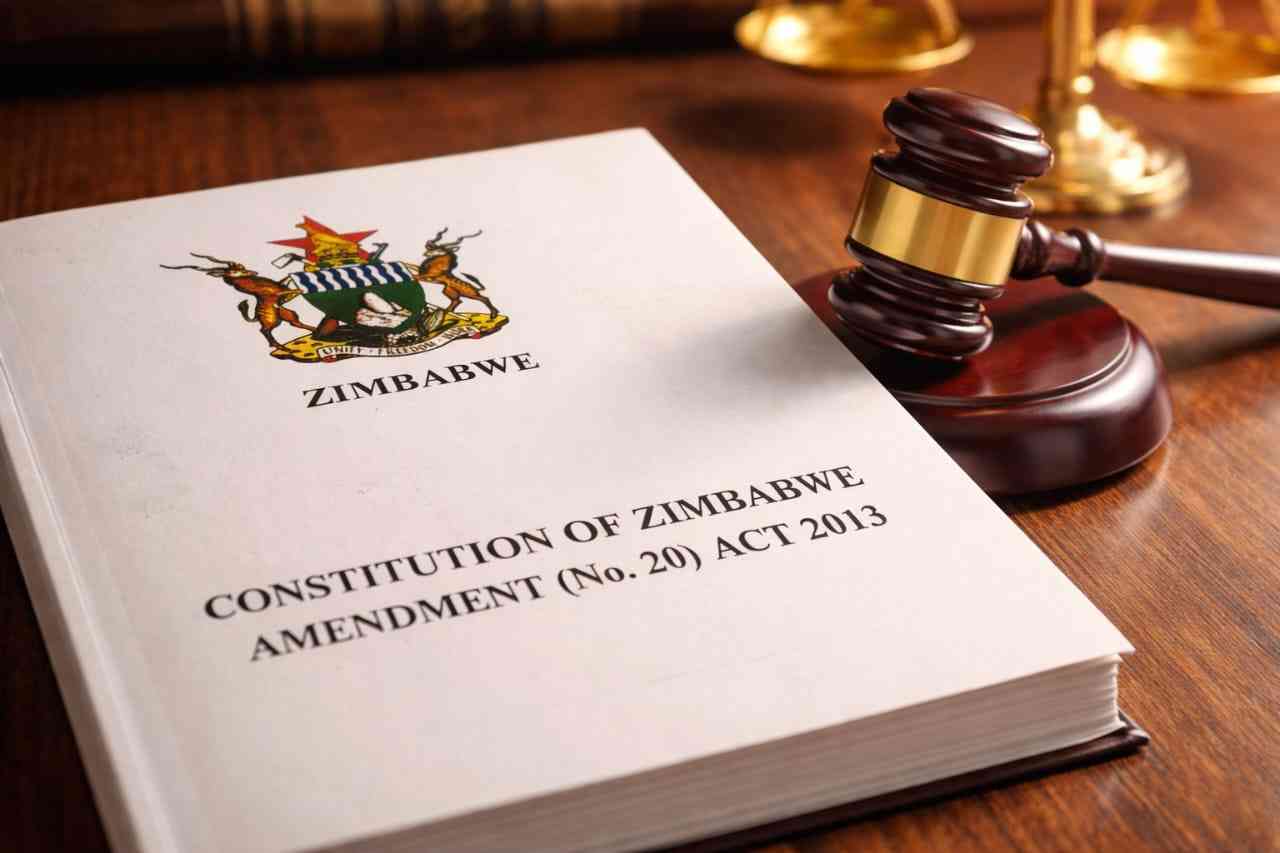
Globally, the outcomes of all struggles for state power are determined and legalised by constitutions.
In the context of classical state formations which was predominantly marked by the erosion of monarchical states in the West, constitutions became the mediating agents of transitions and subsequent socio-political reforms.
Constitutions became the guiding manuals on how post-monarchical democracies were to function. In the age of African nationalism, the constitutionally enshrined disenfranchisement of the African people necessitated the armed resistances which were waged against colonial states across the continent.
Based on these local and Western contexts, it is universally true that the law is created to protect the interests of those in power and it is up to those without state power to fight for their cause and own state power.
After seizing this power, the formerly oppressed should make the law preserve their state power capture.
Likewise, the law must help the new state to eliminate threats of its power consolidation desires.
Therefore, constitutions mediate how power is acquired and protected from seizure by others.
- ED’s influence will take generations to erase
- ‘Govt spineless on wetland land barons’
- Govt under attack over banks lending ban
- Zim Constitution must be amended
Keep Reading
The issues of rights and governance of public institutions are mere additives to the actual import of constitutionalism (otherwise defined as rule of law and not rule by law).
Therefore, at the centre of all constitutionalism is: who get what power and how they ought to use that power once it is seized?
This explains the emotive foregrounding of all constitutional making processes not only in Zimbabwe, but across the world.
Those in power want constitutions to guarantee the security of their stay in power while those without the same power preoccupy themselves with clauses which regulate power retention by state elites.
As such, even the best constitutional amendments are usually described as “violations of people’s rights”, but is this entitlement entirely premised on truth or its merely normative?
The law and interests of the rulers
Madhuku (2010 pp17-22) in his book An Introduction to Zimbabwean Law, outlines the origins of what we consider as common law in Zimbabwe as an ultimate product of Roman-Dutch conquest in modern day SouthAfrica.
“The law applying at the Cape of Good Hope on 10 June 1891 was largely based on Roman and Dutch Law… This is why section 89 of the Constitution of Zimbabwe refers to the law in force in the colony of the Cape of Good Hope and not Roman Dutch Law in force” writes Prof Lovemore Madhuku (ibid pp 18 and 20).
In this instance Madhuku (2010) was referring to the Lancaster-born constitution which has been problematised for being pregnant with “constitutional illegalities”.
Section 16 of Zimbabwe’s old constitution guaranteed security to White minority property rights.
As such, the notion of post-independence remained ceremonially sustained on political democratisation rather than economic democratisation.
This is why when the constitutionally prejudiced majority in independent Zimbabwe demanded land reform, the whole process of land reclamation was treated as illegal.
The desperate call for sharing the land by the Black majority was mediatized as “farm invasions”.
Based on the prevailing constitutionally fraudulent reality, this position was correct and legally binding.
However, in terms of the revolutionary ethos of the struggle for independence which Mahoso (2015; 2017) refers to as the “Living Law of the Land” calling the demand for land ownership justice “invasions” was a reflection of an unrepentant settler mentality carried into the post-independence public policy discourse as constitutionalism.
Therefore, the debates around the land reform programme effectively demonstrated that the ruling elite in Zimbabwe did not own the law which was governing their power.
As Section 89 of the then constitution made it evident that the state was under capture by the remnants of the 1891 law of Cape of Good Hope.
Who really owns the law in Zimbabwe?
I raised the above historical perspective to the contested terrain of constitutionalism to demonstrate that constitutions are not merely produced “by the people, for the people”. In fact, constitutions protect interests of those owing state power.
While the citizenry has a utopian proprietorship to constitutions, the real ownership of the law resides with those in power and not those aspiring to capture state power.
The voter and political formations desirous to capture power only negotiate to have their interests/rights expressed in the law. In the event that no middle ground is found between the ever-growing power appetites of the ruling elite and the pursuit for good governance through the law, the people must motivate processes which change the law as the order of power.
Such has been the methodical procession to all revolutions in the world including our very own nationalist armed struggles.
With this said, it must be understood that the real owner of the current constitution of Zimbabwe is Zanu PF and not necessarily the ordinary man and women in the street.
Therefore, Zanu PF -the political institution as a major owner/custodian of what becomes law from what must not be law naturally has the mandate to ensure that the constitution of the land protects its interests. It will be recalled that the current supreme law of the land was a negotiated product of the Government of National Unity (GNU). Now with the absence of the GNU and the factional degeneration of the opposition forces which gave life to the current constitution, Zanu PF is the major shareowner of this legislative asset which guides of administration of state power in Zimbabwe -the constitution.
The alternative void
Those outside Zanu PF and the opposition can only negotiate their interests to be law or use an alternative route to make that happen.
As it stands, the Parliament’s mediating role in the Constitutional Amendment Bill (CAB) 3 is only providing room for that negotiation of the interests of those opposed to Resolution 1 of the last two Zanu PF National People’s Conferences.
It is this party resolution that has caused for the need for the extension of the country’s electoral circle with the Parliament being given the mandate to choose the country’s head of state in the future.
This buttresses the established point that the law is owned by those in control of state power.
How that power is used; responsibly or otherwise is a process that can be achieved through progressive civil bodies and a vibrant opposition.
However, Zimbabwe lacks an organic civil society and opposition movement. This explains why in the absence of a genuinely domestic alternative, Zanu PF will still have its way until CAB 3 becomes law.
Misplaced focus
On Day 1 of the CAB 3 in Bulawayo, it was widely reported that the opposition mayor for Bulawayo David Coltart and prominent anti-Zanu PF activist Judith Todd were denied the opportunity to speak during the public hearing at the Bulawayo City Hall.
The same goes for Gift Siziba another key figure in Zimbabwe’s opposition politics. The reportage suggests that the hearings in Bulawayo were null and void because Coltart, Todd and Siziba were deliberately denied the opportunity to make their contributions.
However, this biased and polarisation foregrounded narrative makes it appear as if certain individuals carry more authority to assert their personal views on issues of national interest than others.
This means that other people who were denied the same opportunity to speak due to the protocol of the proceedings don’t matter.
Instead of focussing on proposing solutions to the logistical and protocol limitations the nation’s anger was being directed to three individuals’ failure to express their dissent during the hearings.
Howabout the other countless people who rightfully expressed their dissent to the bill perhaps better than the Bulawayo anti-CAB 3 Bill trio? An ordinary observer who was in the hall Joshua Nyapimbi warns:
We need to rid our society of the mentality that prominence guarantees a platform. Being a well-known personality in a public forum does not mean one can always have their way, nor does it mean one’s voice is more valuable than that of the unemployed youth or the grandmother sitting in the back row. Democracy is messy, and in a town hall setting, everyone is subject to the same time constraints. The media must also get over its obsession with using preferred personalities to push a specific narrative.
By focusing solely on the "silencing" of Coltart and Todd, the press effectively erases the dozens of other Zimbabweans who were also denied the floor. There were several others at the meeting who raised critical issues - points that Coltart or Todd might have raised themselves. Yet, these arguments are seemingly viewed as less plausible or less newsworthy simply because they were not articulated by a prominent figure. (Facebook handle, Gono Chirandu)
Prior to that, political activist Jealous Mawarire leaked an alleged leaked voice note of Nelson Chamisa suggesting that the erstwhile dominant force in opposition politics was begging to be a Zanu PF proxy.
The emotions flown all over social media about Chamisa’s betrayal to those opposed to Zanu PF is also indicative of how a mass point of dissent has been leased to an individual and that his desire (whether true or false) to enjoy his right to freedom of association outside anti-Zanu PF circles makes him a “sellout”.
While this rage of anger found its ways to X, WhatsApp and Facebook, Zanu PF was mobilising participants to the CAB 3 hearings and again the argument about “bussing people” was raised as if those who were “bussed” were not voluntarily committed to defending a political position which they thought was right and justifiable.
Besides, what stopped the opposition collective from doing the same, if this has proven to be a tried and tested political mechanism for manufacturing consent?
The problem is that that we have an opposition which believes in applying priestly virtues to what is meant to be an immoral game. Zanu PF’s will still emerge victorious. Zanu PF’s opposition is a collective of tantrum throwers who demand the fight for state power to be fair.
Where to from here?
If allegations of Zanu PF’s bussing of CAB 3 Hearings participants are anything to go by, it means that even if the amendment bill was going to be subjected to a referendum which prominent voices in the opposition are demanding, Whether theatrical or real, the pro-CAB 3 sentiment forms a permanent and prominent public record which muzzles any future contestations to the outcome of this law-making process which will be in favour of Zanu PF.
Now that we have established that the debate on whether the bill is legal or not is irrelevant at this stage and that the bill will eventually become law, there is need for structured policy dialogues on how the future of democracy will look like when CAB 3 becomes law.
There is need for an organic facilitated civil society process to ensure that the outcome of this current Zanu PF power consolidation process delivers a true and holistic paradigm shift to national development.
Going forward, the academia and business community must be developing adaptation mechanisms to the continuity and discontinuities which await all of us in the aftermath of this amendment bill. Zimbabweans must be ready to embrace this change or will be embraced by this change. Now, the question is, are we ready for this change?