
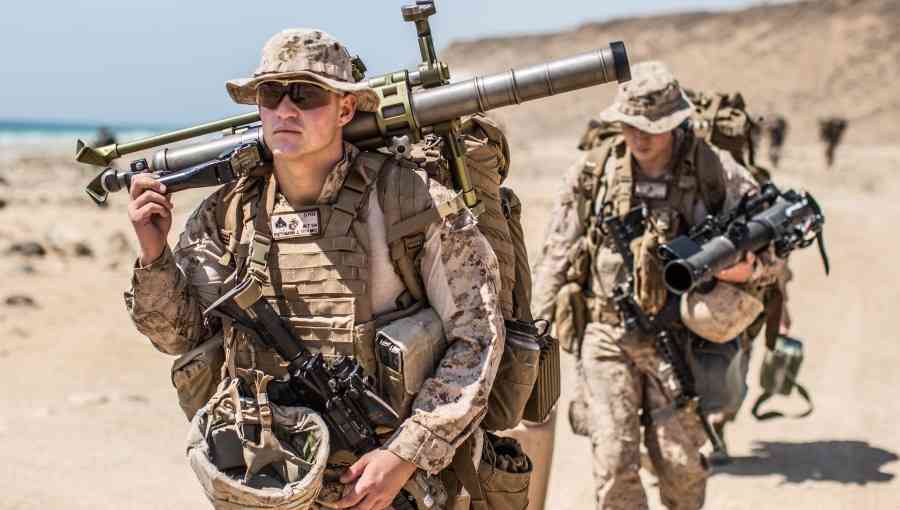
A consensus among leading military strategists — including McCaffrey, Kaplan, Macgregor — and analytical bodies such as Stratfor delivers a unified warning: a US ground invasion of Iran would be a catastrophic strategic error.
Their assessments go beyond troop counts to expose a fatal misalignment between American power projection and Iran’s geographic and national resilience.
Part 1: Why a ground invasion is strategically unfeasible
First, geography is Iran’s ultimate defense. As Stratfor observes, Iran is a mountain fortress.
The Zagros range channels armored columns into narrow, predictable corridors where US air superiority and long-range precision fire are neutralized.
Iranian mobile anti‑armor teams, equipped with Toophan and Dehlaviyeh missiles, hold elevated, pre‑positioned firing positions. Modern tanks become vulnerable in such terrain.
Second, manpower and attrition favor Iran. Estimates of half a million U.S. troops appear conservative.
The 2003 Iraq invasion required roughly 150 000 troops against a smaller, flatter, militarily degraded country.
- Mavhunga puts DeMbare into Chibuku quarterfinals
- Bulls to charge into Zimbabwe gold stocks
- Ndiraya concerned as goals dry up
- Letters: How solar power is transforming African farms
Keep Reading
Iran’s military culture, forged in the 1980–1988 war, is optimised for attritional and popular defense.
Even 500 000 troops would be overstretched from Khuzestan to the dense urban terrain of Tehran.
Third, Iran’s unified national identity defeats occupation. Unlike artificially constructed post-colonial states, Iran has a 2,500‑year‑old national consciousness.
A foreign invasion would trigger an overwhelming rally‑round‑the‑flag effect. Internal dissent would dissolve in the face of occupation.
Every Iranian becomes a defender of national sovereignty.
Fourth, technology cannot hold territory. Drones and cyber tools disrupt but cannot secure ground. Iran has built layered air defenses and over 1 000 accurate ballistic missiles capable of striking US bases in the Gulf within minutes.
American regional air bases would face sustained bombardment from day one — a threat the Pentagon has never fully confronted.
Part 2: Global implications of a failed invasion
A failed invasion — marked by stalled advances, heavy casualties, or negotiated withdrawal — would reshape the global order.
In the South China Sea, U.S. credibility would collapse. Allies would doubt Washington’s ability to fight in two theaters.
China would accelerate maritime activities, testing American security commitments.
The vulnerability of US carriers to massed drone and missile attacks — demonstrated against Iran — would end the myth of naval invincibility.
Across the Global South, a US setback would accelerate de‑dollarization. Nations would rapidly shift trade to non‑dollar currencies.
Non-aligned states would realign toward the SCO and Brics, as US coercive power fades.
In Africa, America’s 29 military bases would be exposed as vulnerable and obsolete.
Popular and political pressure would demand closure. Africom’s relevance would collapse.
Russia and China would quickly fill the security vacuum with bilateral defense and logistics agreements.
Part 3: The end of unchallenged US military primacy
A large‑scale missile and drone campaign against US forces in the Middle East would inflict casualties and destroy assets on a scale not seen since 1945.
The psychological barrier of American invincibility would shatter. Deterrence would weaken, encouraging future challenges from state and non-state actors alike.
Part 4: African reaction — The Zimbabwe template
Zimbabwe embodies the sovereign-minded African response.
1. Diplomatic condemnation: It would co-sponsor UN and AU resolutions denouncing US aggression.
2. Solidarity with Iran: It would deepen trade and agricultural cooperation to bypass sanctions.
3. Campaign to close U.S. bases: It would lead Sadc calls for shutting Africom facilities.
4. Deeper alignment with China and Russia: It would entrench its “Look East” policy and frame the US failure as the end of unipolarity.
A US ground invasion of Iran would not be a war — it would be an unraveling of American global authority.
For nations long subject to Western sanctions and lectures on sovereignty, such an outcome would validate their critique of hegemonic overreach.
The myth of American military supremacy, already weakened in Afghanistan, would be buried in the Zagros Mountains.
The future belongs not to the largest arsenal, but to resilient geography, unified nations, and emergent multipolar order.
*Saxon Zvina is a principal consultant at Skyworld Consultancy [email protected] | X: @saxonzvina2


