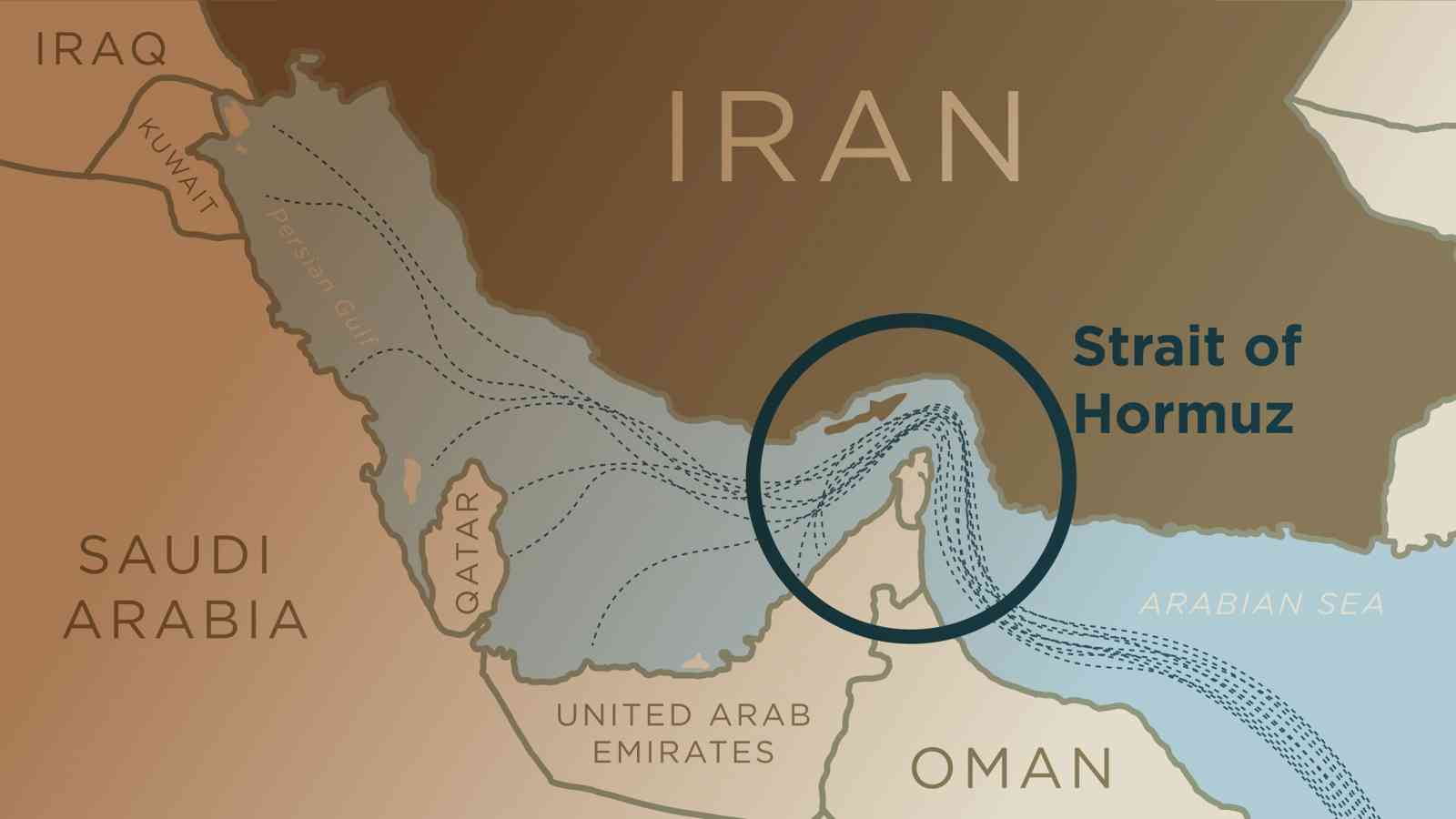
The conflict in the Strait of Hormuz between the United States and Iran may feel geographically and politically distant from Zimbabwe. It is not. Over the past three weeks, Brent crude oil has traded between US$100 and US$110 per barrel, levels not seen sustainably in years, as the United States maintains a blockade of the strategic waterway through which roughly one-fifth of the world's seaborne oil passes daily.
The blockade is set to remain in place until a formal agreement is reached, and Iran has so far refused to dismantle its enriched uranium stockpile. Resolution remains uncertain.
For Zimbabwean households, businesses, and beginner investors, this is not abstract geopolitics. It is an unfolding economic story with direct implications for what you pay at the pump, what you pay for transport and food, and what your savings will be worth six months from now.
Zimbabwe imports nearly all of its refined fuel. The country has no refining capacity of consequence, which means every litre of petrol and diesel arriving at a Zimbabwean service station has tracked through international markets, regional pipelines, and the country's foreign currency allocation system. When the global oil price rises, it transmits to the pump price with a lag of weeks, not months. Brent at around US$104 per barrel is approximately fifty per cent higher than the same time last year, and Zimbabwe is now absorbing that increase.
The first-order effect is straightforward: motorists pay more. The second-order effects are broader. Fuel is an input into nearly every productive activity in the economy. Higher diesel costs raise the cost of agricultural production, freight, manufacturing, and electricity generation where diesel generators substitute for an unreliable grid. These costs are passed through to the prices of bread, mealie-meal, building materials, and almost every consumer good produced or transported domestically. This is what economists call cost-push inflation, and it is now in motion.
There is a second mechanism worth understanding, which is the effect on the Zimbabwean dollar and on the broader monetary environment. When fuel imports become more expensive in United States dollar terms, the country requires more foreign currency to finance the same volume of consumption.
This places pressure on the central bank's reserves, on the parallel exchange rate, and on the real purchasing power of the ZWL. For households holding savings in local currency, the real value of those savings is being quietly eroded.
The picture is further complicated by recent signals from the United States Federal Reserve. Governor Christopher Waller has indicated that the central bank may need to hold interest rates higher for longer, or even raise them, in response to oil-driven inflation in the American economy. A stronger United States dollar globally translates into additional pressure on emerging-market currencies, including the ZWL. Diaspora remittances, which form a meaningful share of household income in many Zimbabwean families, are also affected: a stronger dollar increases the local-currency value of remittances received but, in real terms, the recipient's purchasing power depends on how quickly local inflation is rising.
- Letter from America: The war in Ukraine has brought the best and the worst in man
- Green Fuel fulfills its Chisumbanje pledge
- Letter from America: The war in Ukraine has brought the best and the worst in man
- Act on Pandora Papers expose
Keep Reading
What beginner investors should be watching
There are no easy answers in this environment, and certainly no guaranteed trades. There are, however, four frameworks worth holding in mind.
The first is the difference between nominal and real returns. A savings account paying interest in ZWL may appear to generate positive returns, but if inflation runs higher than that interest, the real value of the savings is shrinking. In a high-inflation environment driven by external shocks, this distinction becomes critical and is too often overlooked.
The second is currency exposure. A household whose income, savings, and expenses are all denominated in ZWL is fully exposed to local currency movements. A household with a portion of savings or earnings in United States dollars has, in effect, a partial hedge against ZWL depreciation. This is not a recommendation to convert all savings; it is an observation that currency diversification is itself a form of risk management.
The third is to consider productive assets in light of these forces. Listed companies on the Zimbabwe Stock Exchange and the Victoria Falls Stock Exchange vary considerably in their exposure to fuel input costs and to United States dollar revenues.
Mining companies that earn in hard currency and sell internationally trade on different fundamentals to retailers and service businesses whose costs are rising and whose customers face real income compression.
Understanding which category a business sits in is the beginning of informed investment thinking.
The fourth is to maintain a cash reserve regardless of what the macro environment is doing. Volatility creates both risk and opportunity, and the investor with cash available during periods of market dislocation is often the investor best positioned to act.
A note on what cannot be predicted
The Strait of Hormuz situation could resolve in the coming weeks, in which case oil prices may fall sharply and the inflation picture will ease. Equally, the situation could escalate further, in which case the pressures described above will intensify. Neither outcome can be forecast with confidence.
What can be done is to understand the transmission channels, monitor the indicators that matter, and position one's financial life with an honest assessment of one's own risk tolerance and obligations. The most important habit a beginner investor can develop in environments such as this one is the discipline of asking simple questions before acting. What is my time horizon? What can I afford to lose? What do I actually understand about the asset I am about to buy? An investor who answers those questions honestly is already ahead of most market participants.
*Isaac Jonas is the founder and principal consultant of Streetwise Economics, an applied economics consulting practice based in Abbotsford, British Columbia, Canada. His work focuses on regional economic analysis, labour market intelligence, and capital market commentary, with clients across Canada and Zimbabwe. He holds a Master of Food and Resource Economics and an MA in Resource, Environment and Sustainability from the University of British Columbia, and a BSc Economics from the University of Zimbabwe, where he was a Mastercard Foundation Scholar.
Website: streetwiseeconomics.com · YouTube and Substack: Streetwise Economics
Follow Streetwise Economics on YouTube and Substack for more applied analysis. I am also available on social media — and always happy to discuss these ideas further or to take on commissioned research, applied economic analysis, labour market reports, and policy advisory work for institutional and corporate clients. Nothing in this article should be taken as investment advice. Always consult a licensed advisor and do your own due diligence before investing your money. Investing comes with risks