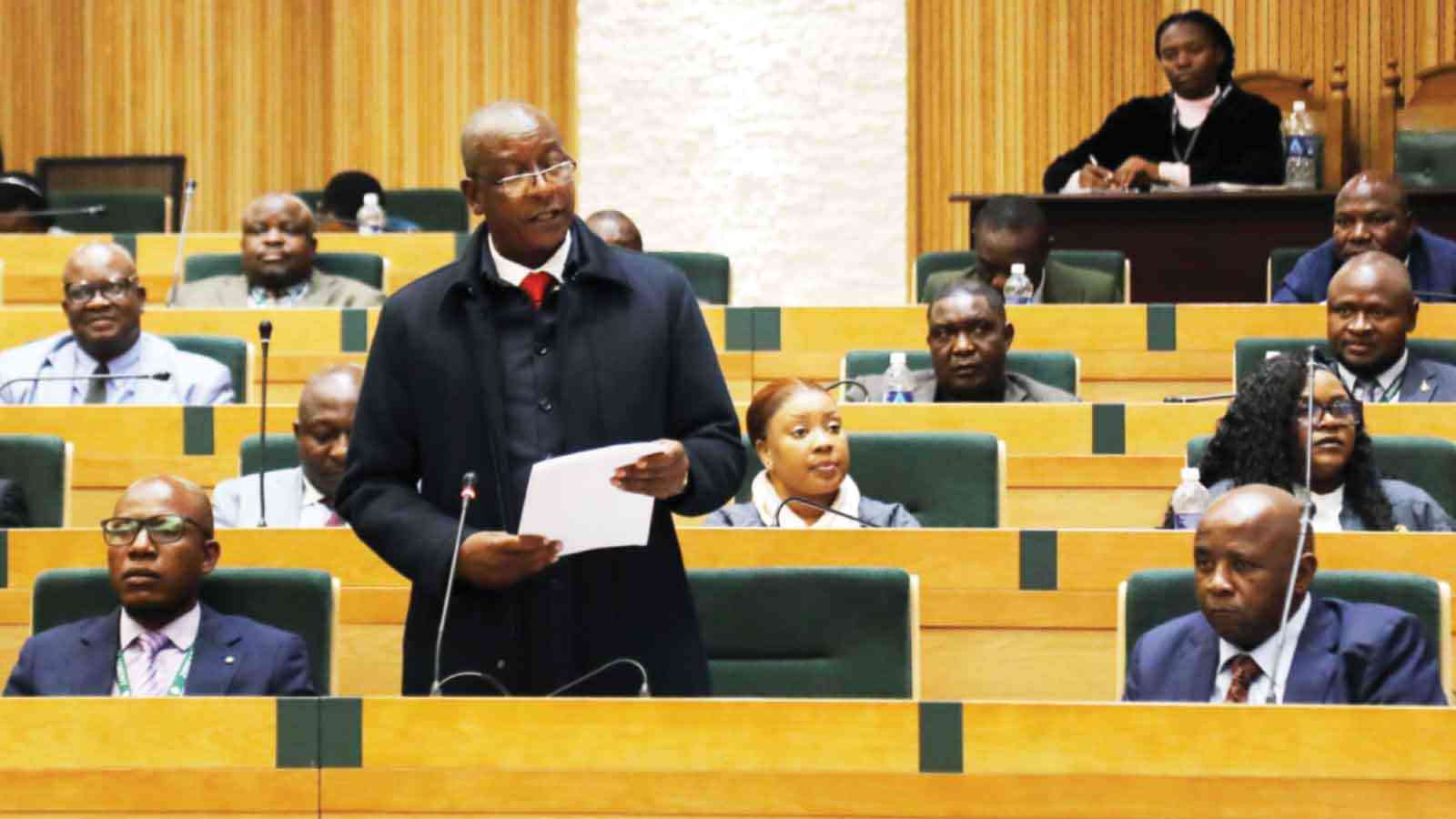
The ghost of authoritarianism has returned to haunt the halls of Zimbabwe’s Parliament.
As the National Assembly debates Constitution Amendment Bill No. 3 (CAB3)—a piece of legislation that threatens to alter the country's constitutional bedrock without a public referendum—the proceedings have devolved into a chilling display of democratic erosion.
What should be a sacred deliberative process has instead become a stage for silencing dissent and intimidating those who dare to stand for the rule of law.
The conduct of Parliament’s presiding officers is particularly alarming. By reportedly blocking opposition legislators from airing their views and allowing ruling party lawmakers to dominate the floor, they have abdicated his constitutional duty to preside impartially.
The systematic exclusion of the Citizens Coalition for Change (CCC) Progressive Caucus, whose names were allegedly purged from speaking lists by self-imposed secretary-general Sengezo Tshabangu, is a direct assault on representative democracy.
When an MP is silenced, the thousands of citizens they represent are effectively disenfranchised.
As constitutional expert Lovemore Madhuku rightly noted, the presiding officers have ceased to be an arbiters and have instead acted as an instrument of Zanu PFs plan.
However, the rot extends beyond the parliamentary chamber. The struggle for constitutional integrity is now being met with literal instruments of death.
- News in depth: Fears of violent 2023 polls grow as ED fails to deliver on promises
- Chamisa party defiant after ban
- Letter to my people: Mthuli Ncube experiment has failed
- News in depth: Slain Moreblessing Ali’s family fears cover-up as children are forced into hiding
Keep Reading
The delivery of a bullet to the doorstep of activist Youngerson Matete, coupled with a demand to withdraw his court challenge against the bill, is a barbaric attempt to settle legal disputes through terror.
Similarly, the chilling death threats directed at Joelson Mugari for organizing peaceful protests reveal a state apparatus—or its proxies—that is terrified of the public voice.
Zimbabwe stands at a critical crossroads. A process managed by compromised institutions and fueled by material inducements cannot produce a legitimate constitutional outcome.
When legislators are allegedly swayed by trinkets, money, and farms, and dissenters are met with bullets, the resulting laws carry no moral weight.
Parliament belongs to the people of Zimbabwe, not to any single party or faction.
If the state continues to muzzle elected representatives and threaten the lives of activists, it confirms that CAB3 is not a reform for the country, but a power grab by the few.
Democracy is not tested by how we treat those with whom we agree, but by how we protect the right of dissenting voices to be heard.
Zimbabwe deserves a constitution born of consensus, not one forged in a furnace of intimidation and bias.