When a company becomes famous enough, even people who have never invested a dollar begin asking questions.
That is exactly what is happening with SpaceX.
For years, SpaceX was a company most ordinary investors could only watch from a distance. It launched rockets, supplied NASA, deployed satellites, and made headlines whenever one of its spacecraft successfully landed itself back on earth. Now, as the company prepares for a public listing, millions of people around the world are asking a simple question:
Should I buy it?
Before answering that question, it is worth understanding why SpaceX has captured so much attention in the first place.
More than a rocket company
Most people think SpaceX is a rocket company. That is only partly true.
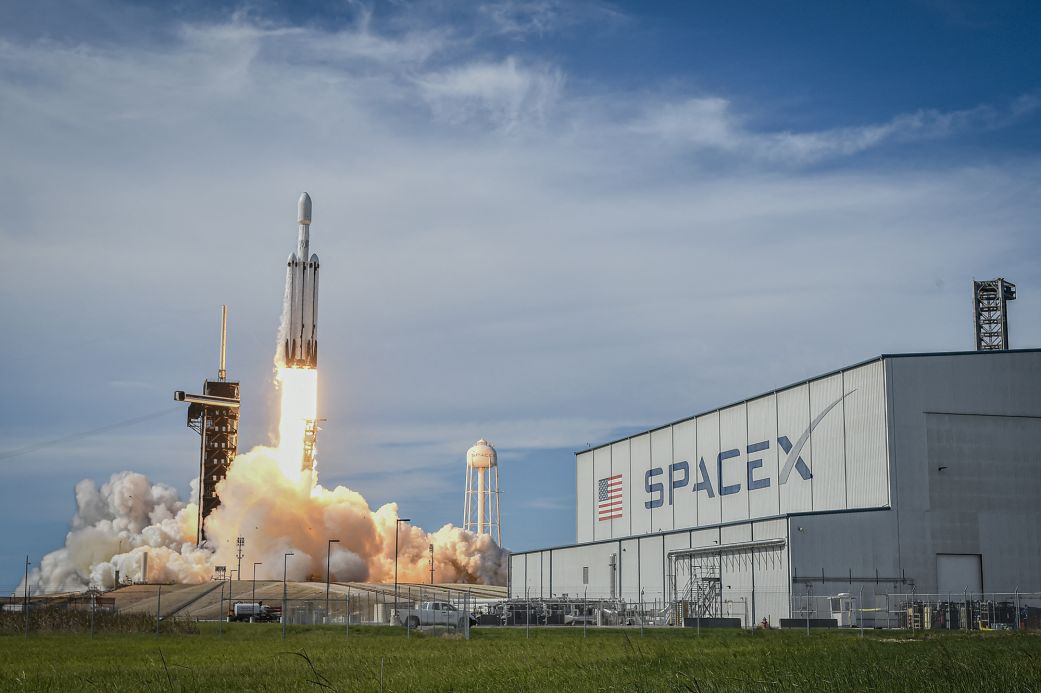
The company launches rockets — and its Falcon 9 now commands roughly 82% of global commercial launches. But it has also built one of the world’s largest satellite internet networks through Starlink, which grew from zero subscribers in 2020 to more than nine million active users across 125 countries by the end of 2025. It supplies military-grade communications to the US Department of Defense through Starshield. And in early 2026, it acquired xAI, Elon Musk’s artificial intelligence venture, adding a large language model platform and substantial compute infrastructure to its portfolio.
- Businessman locks horns with top judges
- Sunsleey Chamunorwa: Of journalism and reggae’s level vibes
- Renowned journalist Sunsleey Chamunorwa dies
- Student teachers want corporal punishment back
Keep Reading
Investors are not simply looking at rocket launches. They are looking at what SpaceX could become over the next decade. That future potential is what excites markets.
But it is also what creates risk.
A great company is not always a great investment
One of the most important lessons in investing is understanding that a great company is not always a great investment. The difference is price.
Imagine being offered a vehicle worth US$20 000. At US$20 000 it may be a reasonable purchase. At US$100 000 it may be a terrible one. The vehicle has not changed. Only the price has changed.
Stocks work in much the same way. Investors often become excited about the story and forget to ask what they are paying for that story.
In my earlier analysis of SpaceX — published in the April 2026 edition of this column and available in full at www.streetwiseeconomics.com — I examined this question in some detail. At its targeted listing valuation of US$1.75 trillion, SpaceX was asking investors to pay a price-to-revenue multiple of approximately 113 times its 2025 revenues of US$15.5 billion. Even on 2026 projected revenues of US$24 billion, the multiple remains above 70 times. For context, Nvidia — the defining company of the artificial intelligence era — trades at roughly 30 times revenue.
The numbers are extraordinary. The question is whether the ambition eventually justifies them.
History offers a lesson — but not a guarantee
History is full of examples where expensive-looking companies eventually justified their valuations — and many more where they did not. Amazon went public in 1997 when it was losing money and asking investors to bet on an entirely unproven model for commerce. Google listed in 2004 at US$23 billion on the premise that internet search could become one of the world’s most valuable businesses. Both eventually proved the sceptics wrong by a very large margin.
SpaceX’s bull case follows the same logic. Starlink’s nine million subscribers represent a fraction of its total addressable market. Direct-to-cell connectivity — enabling internet access directly to standard smartphones without additional hardware — could open a subscriber universe counted in billions rather than millions. The bear case, equally, is real: the xAI acquisition brings substantial monthly costs, Starship has not yet demonstrated operational scale, and Elon Musk divides his attention across Tesla, X, and several other ventures.
But here is the honest point: nobody knows with certainty which path SpaceX will take. That is true of every investment. The challenge is to price uncertainty correctly — not to eliminate it.
A note for Zimbabwean readers
For readers of this column, there is a lesson inside the SpaceX story that goes beyond any single stock.
The world is becoming increasingly connected. Today, an investor sitting in Harare can access information about a company in California almost instantly. International brokerage platforms have made global markets more accessible than ever before. That access creates genuine opportunity.
But access also creates temptation. The temptation to believe that every famous company is automatically a good investment. That is rarely true.
Successful investors usually follow a process. They ask how the company makes money, whether revenue is growing, what risks could affect future performance, and — perhaps most importantly — what happens if their expectations are wrong. These questions are not exciting. They do not generate social media headlines. Yet they are often the difference between successful investing and expensive mistakes.
The real danger: Fomo
Economists have a name for what often drives investment decisions around high-profile listings. It is called Fomo — fear of missing out. Fomo has probably destroyed more investment returns than recessions.
People become convinced that they must buy immediately because everyone else appears to be doing so. Financial markets have a habit of reminding investors that patience is often rewarded. Some of the best opportunities emerge not at the moment of maximum excitement, but after it fades and reality begins to replace speculation. The post-lock-up period, typically 90 to 180 days after listing when early investors are first permitted to sell, has historically offered more favourable entry points than the IPO price itself.
That does not mean SpaceX will succeed or fail. It simply means investors should separate the quality of the business from the price of the shares. Those are different questions requiring different answers.
THE BIGGER PICTURE
The broader reason I find the SpaceX story interesting is not because of one stock. It is because it reflects a larger economic shift. Technology, communications, artificial intelligence, satellite infrastructure, and global connectivity are increasingly shaping how economies function. The businesses that dominate those sectors will influence investment markets for years to come.
Understanding those trends matters whether you invest in SpaceX or not.
As readers of my April analysis will know, I have already examined SpaceX in detail — the revenue breakdown, the scenario modelling, and the conditions under which I would personally consider a small allocation. The purpose of this column is different. It is to remind ordinary investors that curiosity is healthy, but discipline is essential.
You do not need to own every exciting company to build wealth. You do not need to chase every headline. You do not need to buy something simply because everyone else is talking about it.
What you need is a process.
♦ ♦ ♦
The investors who succeed over the long term are usually not the ones who predict the future perfectly. They are the ones who consistently manage risk, ask questions, and avoid making emotional decisions.
Whether SpaceX becomes one of the greatest investments of this generation remains to be seen. What is certain is that it offers a timely reminder of a principle that never changes:
A famous company is not automatically a good investment. And a good investment is not determined by popularity. It is determined by price, patience, and discipline.
* Isaac Jonas is a Canada-based economist and principal consultant at Streetwise Economics, as well as a retail investor and trader focused mainly on the US and Canadian capital markets. He is not a licensed financial advisor, and nothing in this article constitutes investment advice, a recommendation, or a solicitation to buy or sell any security. Markets carry risk, including the loss of capital. Always do your own research and consult a qualified, licensed professional before making investment decisions.