Something unusual has been happening on Wall Street this month, and the two halves of it point in opposite directions.
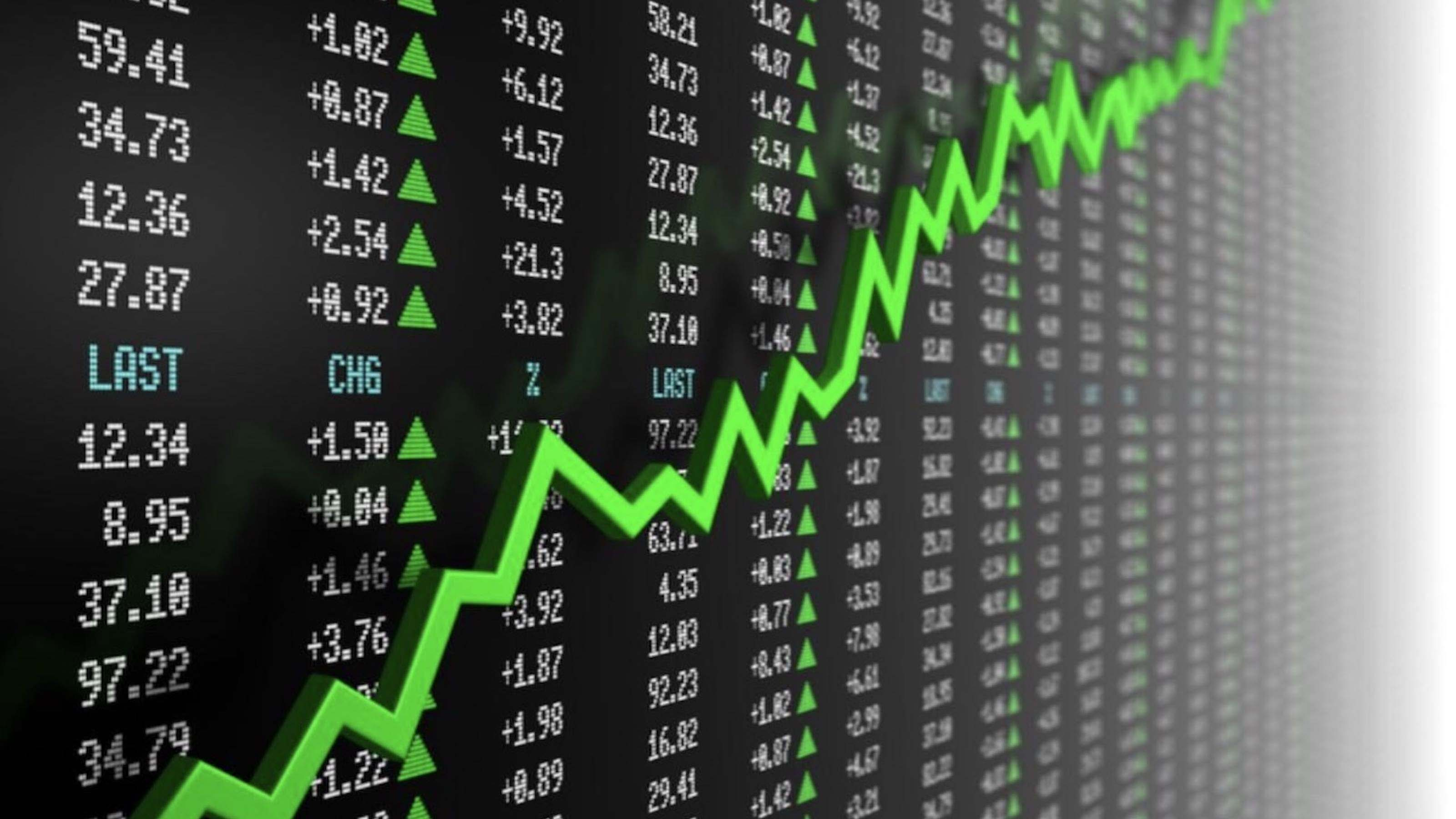
Earlier in August, the S&P 500 — the index that tracks America’s 500 biggest listed companies, and the one I use in this column as shorthand for the US market — closed at 7 798.99.
That was its 27th record close of the year. Investors were cheerful. Company profits have held up, and the Federal Reserve has stopped raising interest rates.
Then, in the same week, something else happened. The interest rate the American government has to pay to borrow money for 30 years climbed to 5.34 per cent. That is the highest it has been since 2007, before most of us had smartphones.
Shares have been falling since. By Wednesday’s close the S&P 500 was at 7,691.76, roughly 1.4 per cent below its peak, after several days of losses.
What a bond is, in one paragraph
Most people have never bought a government bond, so let me explain it the simple way.
When a government needs money it borrows from investors, and it writes them an IOU that promises to pay interest every year and return the original sum at the end. That IOU is a bond. Investors buy and sell those IOUs among themselves afterwards, exactly as they trade shares.
- Teachers, other civil servants face off
- Veld fire management strategies for 2022
- Magistrate in court for abuse of power
- Vungu Dam water treatment and irrigation project takes off
Keep Reading
Here is the part that trips people up. If an old bond pays 3 per cent a year, and new bonds are being issued paying 5%, nobody wants the old one at full price. Its price has to drop until it is worth buying. So when you hear that bond yields are rising, what has actually happened is that bond prices are falling. The two are the same event described from opposite ends.
Which means the world’s safest investment has just handed its owners a real loss. Safe means the government will not fail to pay you. It has never meant your money cannot go down.
Why lenders are demanding more
Three things pushed those rates up, and none of them is mysterious.
The first is inflation. American prices rose 3.4 per cent in the year to July. That is lower than the month before, but it is still well above the 2% the Federal Reserve aims for, and it has been above target for more than five years now. If you are lending money for 30 years, inflation is what eats your repayment. You want compensation for that risk.
The second is government debt. America’s budget deficit in July was the largest for any single month since March 2021. A borrower asking for more, more often, eventually pays a higher rate. That is as true for Washington as it is for anyone.
The third is the one is the enormous sums being spent building artificial intelligence — data centres, chips, electricity — used to come out of company profits. Increasingly it is being borrowed. A wave of new AI-related debt has arrived in the market at the same time as everything else, and it has pushed the price of borrowing up for everybody.
Why this drags on shares
This is the connection that matters, and it is simpler than it sounds.
Every investor is always making one comparison. What can I earn safely, and what am I being offered for taking a risk?
When safe American government debt paid 1 or 2%, shares were the only game worth playing. You had to own them. Now that same safe lending pays around 5% for 30 years, and a shade under 4.7% for 10. Suddenly the risky option has to work considerably harder to be worth the worry.
That is why share prices slipped even though nothing bad happened to the companies themselves. Nothing changed about their profits this week. What changed is the alternative.
There was a moment on Wednesday that made the point neatly. The US Treasury announced it would double a programme designed to calm the bond market.
Rates dipped briefly, then climbed straight back, and shares fell anyway. When an intervention of that size fails to hold, it tells you the pressure is coming from something real rather than from nerves.
Worth noting, though: the market’s own fear gauge closed at 15.84, which is low by historical standards. This has the look of investors recalculating, not panicking.
What usually settles the argument
In my experience, arguments between the share market and the bond market are usually settled by the bond market. Not always, and not quickly, but bonds tend to be the more sober of the two. They are bought by people worrying about being repaid, while shares are bought by people imagining what might go right.
The next real test is September15 and 16, when the Federal Reserve meets again. It held rates in a range of 3.50 to 3.75% in July, but the decision was not unanimous — three of the twelve voting members dissented, unhappy that inflation has sat above target for so long. And in a survey this week, two thirds of nearly 400 professional investors said they expect the ten-year borrowing rate to pass 5 per cent before the year is out.
None of that is a forecast from me. I do not make them, and anyone who does with confidence should be treated carefully.
What a Zimbabwean reader should take from this
Three things, and none of them is dramatic.
First, when America’s borrowing costs rise, the world’s price of money rises with it. US government debt is the benchmark against which nearly everything else on earth is priced. Higher rates there make capital scarcer and more expensive everywhere, and frontier economies like ours feel that at the far end of the chain — in what it costs to fund a project, and in how patient foreign money is willing to be.
Second, if you hold anything offshore, whether through a pension arrangement or a relative in the diaspora, this is the month to check what you actually own rather than what you assume you own.
Third, and most usefully: the idea that safe assets cannot lose money is simply wrong, and this month proves it in public. A loss on a government bond is not a scandal or a failure. It is arithmetic. Understanding that one mechanism — that prices and yields move in opposite directions — puts you ahead of most people who talk confidently about markets.
Records and warnings arrived in the same week this month. That is not a contradiction. It is just a market arguing with itself, out loud, and it is worth listening to both sides.
*Isaac Jonas is an applied economist and founder of Streetwise Economics, an independent economics research and advisory platform. He is not a licensed investment advisor. This article is for educational and informational purposes only and does not constitute financial, investment or legal advice. All investment carries risk, and readers should conduct their own research or consult a licensed professional. More at www.streetwiseeconomics.com.