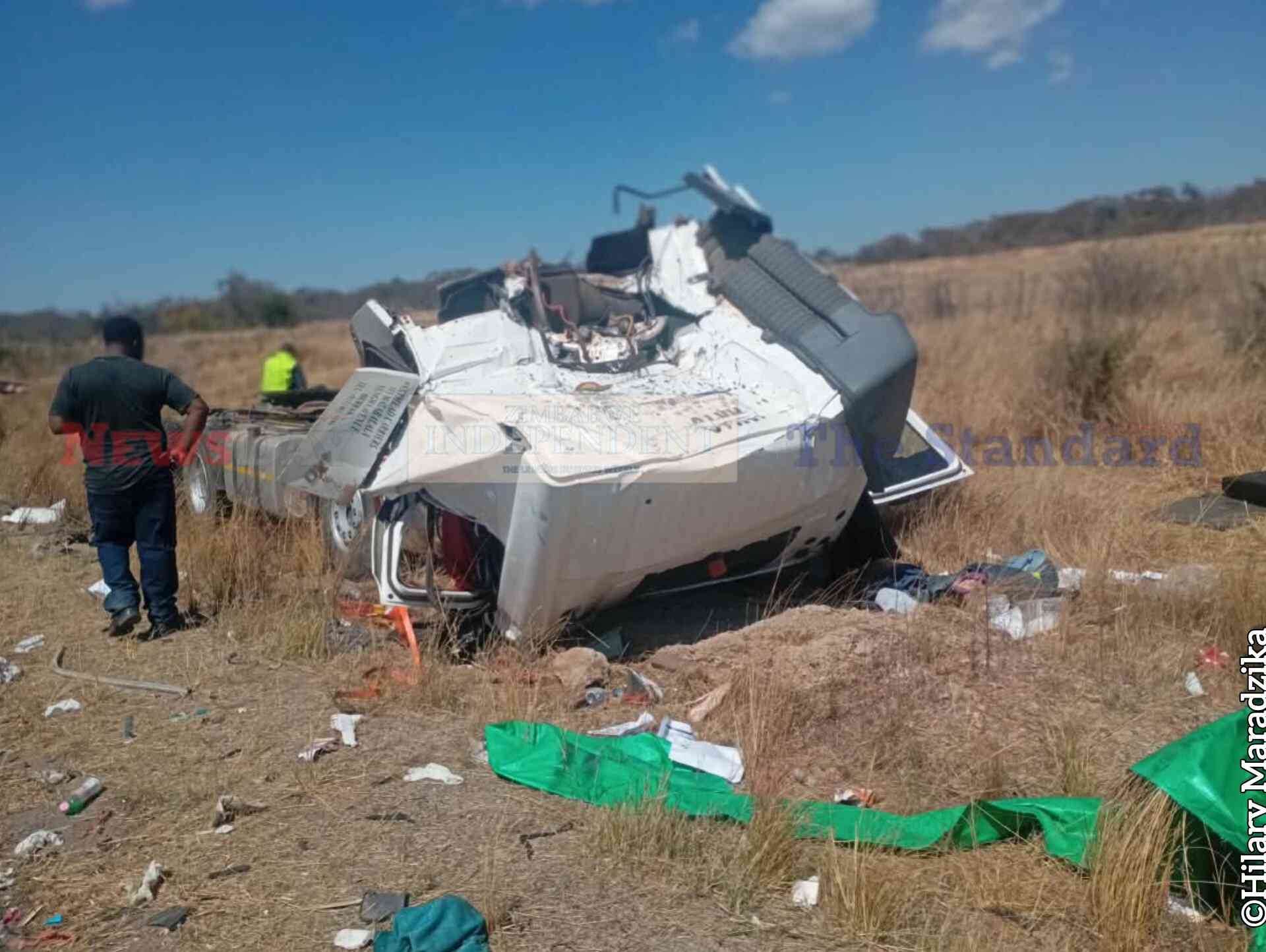
The devastating head-on collision near Chivhu on Friday night, which claimed 27 lives and left seven others injured on the Harare-Masvingo highway, is a horrific reminder of a crisis that has gripped our nation for far too long.
Happening around 8:30 PM near Makumimavi Primary School, the crash saw members of the African Apostolic Church (Mwazha), travelling from Dema to Mvuma for a church conference, lose their lives in an overloaded Nissan Caravan kombi.
The commuter omnibus collided head-on with a foreign-registered Volvo haulage truck that was attempting to overtake another vehicle.
This tragedy is not an isolated incident, but a symptom of a systemic, decades-long collapse in national road safety.
Once celebrated for orderly traffic and well-kept roads, Zimbabwe's road safety has steadily deteriorated since the 2000s. Economic decline gutted road maintenance, and the 2010s saw the situation degenerate into traffic chaos as informal public transport boomed and enforcement weakened.
Despite renewed repairs and policing efforts, dangerous driving remains deeply entrenched across our road networks.
The statistics paint a horrifying picture that demands immediate state intervention.
Zimbabwe now suffers from one of Africa's highest road accident fatality rates, with the World Health Organisation estimating nearly 30 deaths per 100 000 people.
- Confusion rocks Zanu PF audit
- Communities change their ways to protect Zimbabwe’s rare cranes
- ‘Killer’ cops face grilling
- Confusion rocks Zanu PF audit
Keep Reading
While authorities frequently point out that human error causes 94% of road accidents—including cellphone distractions among drivers and pedestrians, which account for about 10% of deaths—this explanation must not become an excuse for official complacency.
Individual responsibility cannot exist without systemic accountability.
It is the state's duty to police our roads, regulate the informal transport sector, and ensure that heavily overloaded vehicles do not slip through checkpoints.
Police have repeatedly cited night driving on poorly-lit roads, overloaded vehicles, reckless driving, and dangerous overtaking as major causes of accidents.
If these deadly hazards are so well-identified, why are they tolerated on our transit routes?
We call on the authorities to implement a rigorous, zero-tolerance approach to highway safety. We need immediate, visible policing on our highways, strict enforcement of vehicle capacity limits, and a serious effort to address night driving hazards on poorly-lit corridors.
The tragic loss of 27 citizens on the Harare-Masvingo highway must be the absolute final straw. The government must act now to restore the orderly traffic and safe roads we once knew.
It is disheartening that Friday’s tragedy when Zimbabwe was still mourning the death of over 97 people on August 11 when a state-owned boat capsised on Lake Kariba. All these deaths were avoidable.