In 2021, China declared the elimination of absolute poverty, lifting 98.99 million rural people out of poverty within a single decade — a landmark achievement in modern development history.
For Africa, still grappling with commodity‑market volatility and legacies of structural‑adjustment policies, China’s anti‑poverty record is more than diplomatic rhetoric.
It offers a real‑world institutional case study. Crucially, this success was not driven by technology and grassroots action alone. It sprang from a confluence of long‑term economic growth, sustained state fiscal commitment, top‑level national planning, and grassroots mobilisation. Africa ought to draw lessons from the underlying logic of China’s mechanisms, rather than replicating its institutions wholesale.
China’s anti‑poverty pivot lay in shifting from broad‑brush regional subsidies to targeted poverty alleviation.
Policymakers recognised that poverty is not a uniform condition, but a compound of overlapping hardships: inadequate water supplies, sub‑standard housing, chronic illness, and geographic isolation.
More than two million cadres were dispatched to rural communities, where granular digital household registries documented household income, health profiles and labour capacity.
This informed the “Five‑Batch” framework, which deployed differentiated interventions: local‑industry development, labour migration to cities, and ecological compensation for residents of fragile zones.
The core takeaway is improved governance precision, not simply expanding administrative staff. With Africa’s high mobile‑phone penetration, countries such as Kenya, Rwanda and Nigeria can build dynamic poverty‑mapping systems by combining mobile‑money infrastructure with community‑level structures. Real‑time datasets can identify vulnerable households before they slip into extreme poverty.
- The brains behind Matavire’s immortalisation
- Red Cross work remembered
- All set for inaugural job fair
- Community trailblazers: Dr Guramatunhu: A hard-driving achiever yearning for better Zim
Keep Reading
Important caveats apply. Detailed digital registries and large‑scale cadre deployment depend on solid fiscal capacity and mature state‑governance systems. Given uneven administrative resources across African nations, direct replication risks data distortion and bureaucratic overload. Pilot programmes with phased scaling represent a more realistic path.
Even after poverty reduction succeeds, households can fall back into destitution due to illness or crop failure. China built a rural social‑safety‑net tripod comprising the minimum‑living‑standard guarantee (Dibao), the new rural pension scheme, and rural cooperative medical insurance.
Targeted medical financial assistance stood out: higher reimbursement rates for catastrophic illnesses mitigated the risk of poverty triggered by ill‑health.
Such outcomes relied on supporting institutions including multi‑source healthcare financing and tiered medical services, and could not be achieved by raising reimbursement ratios in isolation.
Universal health coverage remains out of reach for most African states.
Existing community‑based health‑insurance models in Ghana and Tanzania could be strengthened with public subsidies to remove care‑related financial burdens for the poorest populations. Fragmented social‑protection programmes should be consolidated into unified digital platforms that assess cumulative household vulnerability, repositioning relief as a citizenship‑based entitlement rather than ad‑hoc charity.
Rural population ageing, driven by youth out‑migration to cities, is a challenge China shares with a growing number of African countries.
China’s mutual‑aid elderly‑care model delivers practical, community‑centred support. Governments supply infrastructure and basic medical hardware, while local communities organise peer‑to‑peer care. These care sites maintain close links with village clinics to enable routine health checks and medicine distribution.
Readers should note that mutual‑aid facilities function as a supplementary service; family‑based care remains the primary backbone of rural elderly support in China. As extended‑family safety nets fray under economic pressure across Africa, the “ageing‑in‑place” principle offers a viable middle ground.
Authorities can formalise existing local elderly collectives with modest grants and link them to mobile‑health workers. Cost‑intensive Western‑style institutional care need not be the default solution. Older citizens ought to be framed as pillars of community stability rather than purely as a social‑policy burden.
A society’s governance quality reveals itself in how it protects its most vulnerable members. China embedded disability safeguards within its poverty‑alleviation architecture.
A dual‑subsidy system covers living expenses for low‑income people with disabilities and nursing costs for those with severe impairments. Policy went beyond cash transfers: corporate‑employment quotas and tax incentives encouraged private‑ and state‑owned enterprises to hire rural workers living with disabilities.
Courtyard‑based home workshops provided home‑bound people with severe mobility constraints access to light manufacturing work. These workshops, however, remain local‑scale pilots rather than nationwide standard practice.
For Africa, disability support should not be treated purely as a welfare cost. Tax incentives for agro‑processing firms can create formal or contract‑based roles in sorting, packaging and quality control for persons with disabilities. Private‑sector actors can turn perceived limitations into productive economic potential.
China’s domestic development experience shapes its international‑cooperation agenda. Under the Forum on China‑Africa Cooperation, large‑scale infrastructure investment in railways, ports and power grids addresses long‑standing logistical bottlenecks holding back African trade. Among such initiatives, Agricultural Technology Demonstration Centres deliver highly actionable practical value.
Modelled on China’s domestic agricultural‑extension services, they pair agronomists with local farmers to roll out context‑appropriate hybrid seeds, drip irrigation and post‑harvest storage solutions.
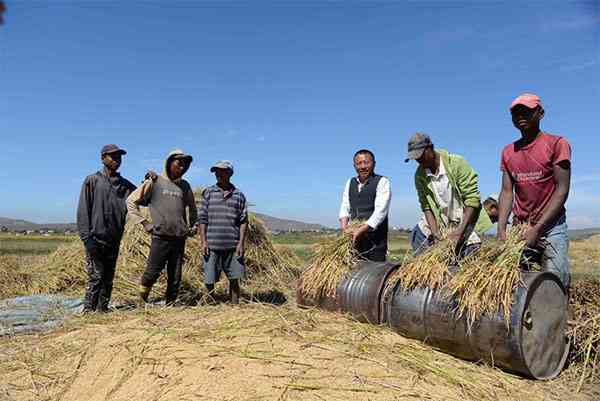
Success cases in Madagascar’s rice sector and Nigeria’s cassava‑processing industry illustrate the strengths of South‑South cooperation, in contrast to historical failed attempts to transplant temperate‑zone farming systems onto tropical soils.
Nonetheless, China‑Africa projects encounter practical socioeconomic obstacles on the ground and demand continuous joint problem‑solving. Instead of rigid, one‑size‑fits‑mandatory‑technology‑transfer clauses, African negotiators may prioritise context‑specific training, knowledge exchange and capacity‑building arrangements under mutually agreed terms.
Drawing on Chinese experience requires Africa to respect its own fiscal and institutional constraints and pursue incremental reform.
First, build dynamic digital‑poverty registries. Leverage existing mobile‑network infrastructure and community organisations to maintain household datasets. Use SMS and USSD channels to log real‑time updates on births, illnesses and harvest failures. Robust data‑governance safeguards must be embedded to mitigate corruption and data‑quality failures.
Second, boost local‑value‑chain development. Africa’s over‑reliance on raw‑commodity exports and weak domestic‑processing capacity calls for targeted policy. Domestic and foreign agricultural investors should be incentivised to build local‑processing zones, so commodities such as cocoa and cotton can be processed domestically before export.
Third, strengthen local‑capacity building through infrastructure partnerships. Move beyond simple build‑operate‑transfer models. Embed technical training and operational‑skills development into project agreements to nurture local engineers and technical workforces.
Fourth, devolve budget authority appropriately. China’s anti‑poverty gains partly stemmed from local‑level flexibility in resource allocation. African governments may devolve portions of anti‑poverty budgets to district authorities, granting them discretion over interventions ranging from ecological compensation to resettlement and industrial‑sector support. Devolution must go hand‑in‑hand with strengthened auditing and accountability mechanisms to prevent local‑level governance failures.
China’s absolute‑poverty‑elimination drive demonstrates that extreme poverty is not an immutable fate. It is a political and governance challenge solvable through top‑level design, sustained fiscal input and grassroots participation. No universal replicable model exists.
Africa should not copy China’s institutional blueprints verbatim. Instead, it ought to absorb core governance principles: precise risk identification, resilient social‑protection systems, multi‑stakeholder engagement of markets and communities, and context‑rooted South‑South collaboration. Relevant reference frameworks are already available. The real test lies in political will and institutional capacity to adapt these lessons to Africa’s own realities.
*Kudzayi Murombedzi is a political scientist based in Harare, specialising in contemporary international relations and diplomacy. Email: [email protected]