THERE comes a point when a government must stop asking citizens to believe that a problem is merely the result of “illegal structures” and start confronting the people who created the problem in the first place.
Harare has reached that point.
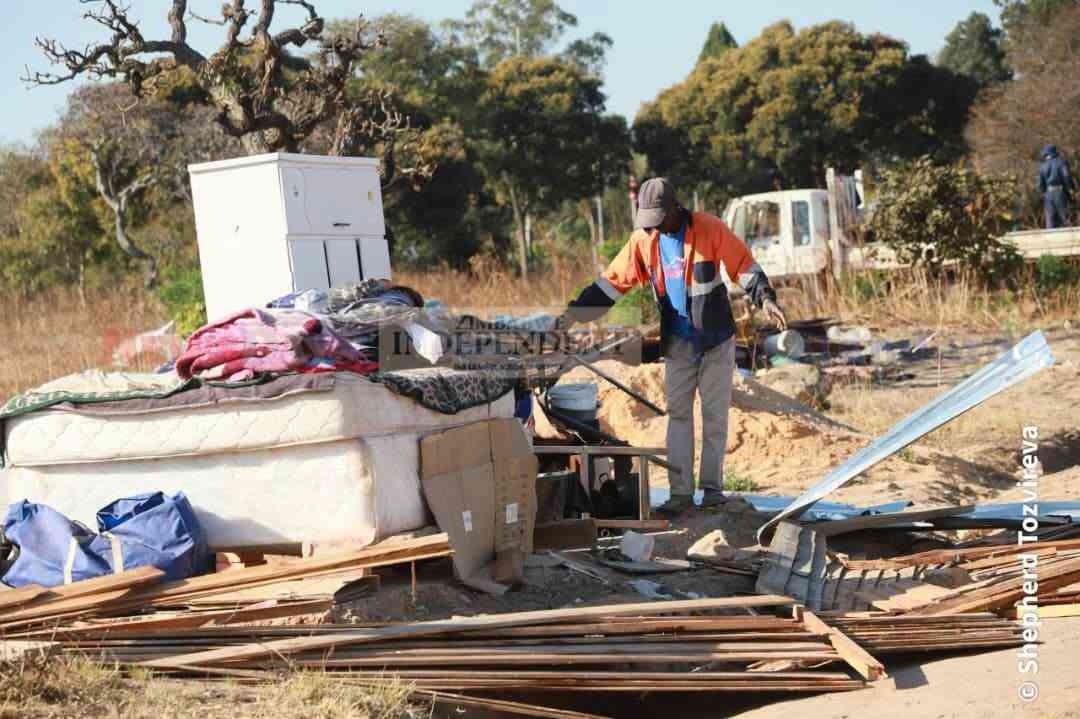
The city is once again preparing for, and carrying out, demolitions of structures described as illegal, with residents in several parts of the capital facing the destruction of homes they may have spent years building.
The City of Harare says it is targeting unlawful settlements, structures on wetlands, road reserves and land reserved for schools and other public amenities. It has also warned that unapproved structures will be demolished.
But there is a question that cannot be bulldozed away: how did ordinary citizens acquire this land in the first place?
A family does not wake up one morning, walk onto council land and magically produce a stand number, payment receipts, cooperative membership documents, offer letters or other paperwork. Somebody is facilitating the transaction. Somebody is collecting the money. Somebody is identifying the land. Somebody is telling desperate home seekers that everything is legitimate.
And, according to the council itself, some of those documents have been forged.
A recent town clerk's report reportedly states that land invaders have been using scanned and forged signatures and counterfeit documents, including in medium- and low-density areas, with cases referred to the police.
- In Full: eighteenth post-cabinet press briefing June 28, 2022
- Harvest hay to prevent veldfires: Ema
- Pomp and fanfare at Pastor Mukariri album launch
- Car hire caught in sungura euphoria
Keep Reading
That admission should change the entire conversation.
If forged council documents are being used to sell land, then the victims are not simply people who decided to break the law. Some may be victims of sophisticated fraud. The tragedy is that they can be punished twice: first by losing their life savings to a fraudulent land transaction, and then by watching a bulldozer destroy the house they built with that money.
This is not an argument that illegal construction should be tolerated. It is an argument that justice must reach the entire chain of wrongdoing.
There is a particularly disturbing possibility that must be investigated properly: whether some land syndicates have access to, assistance from, or protection within institutions responsible for land administration.
That is an allegation, not an established fact, and it would be irresponsible to declare every council official complicit without evidence. But it is precisely the kind of question that a serious investigation should answer.
If counterfeit documents carry apparent council signatures or stamps, investigators should establish where those documents originated, who produced them, who authenticated them, who received the money and whether anyone inside public institutions assisted the fraud.
The issue is not new. Zimbabwe has wrestled with land barons and questionable housing cooperatives for years.
A Commission of Inquiry into the sale of state land was established after concerns over illegal land transactions and unregulated urban settlements. In 2025, the High Court ordered that its findings be made public, and the report was subsequently ordered published in 2026.
That history makes the current crisis even more troubling. This is not some mysterious phenomenon that suddenly appeared last month. The country has known for years that desperate people seeking affordable housing are vulnerable to unscrupulous developers, cooperatives and land barons.
Indeed, reporting on Stoneridge described thousands of home seekers paying administration fees and other charges to a housing cooperative while the ownership of the underlying land remained disputed.
Another recent report described alleged land-barons impersonating council officials through fake WhatsApp accounts to convince residents that they were dealing with legitimate housing authorities.
So where is the enforcement against the architects of these schemes?
The city says individuals, syndicates and land barons involved in illegal land sales will face arrest and prosecution.
Good. That is exactly what should happen.
But promises of future prosecutions are not enough. Citizens need to see investigations, arrests, prosecutions and convictions where the evidence supports them.
A bulldozer destroying a house is highly visible. A criminal investigation into the people who sold the stand is less dramatic, but infinitely more important.
Otherwise, government risks creating a perverse system in which the easiest person to punish is the person standing in front of the bulldozer.
Consider the economics of this tragedy. A desperate family saves for years. They pay a cooperative. They receive paperwork that appears official. They buy building materials.
They employ builders. They construct a home. Children move in. Then, years later, authorities arrive and say the land was never lawfully allocated.
Who took the money?
That is the question that should be asked before the bulldozer starts its engine.
The residents also have responsibilities. Home buyers must verify ownership, title and planning permissions before committing their savings. The council has repeatedly warned people against buying land from unauthorised individuals.
But individual caution cannot replace functioning institutions. Ordinary citizens cannot be expected to detect sophisticated forged signatures or counterfeit municipal paperwork with the same resources available to government investigators.
Harare's housing crisis has created fertile ground for exploitation. When legitimate housing is scarce and expensive, people will take risks. That desperation is precisely what criminals exploit.
Therefore, the answer cannot simply be demolition.
The authorities should establish a transparent land-fraud task force involving the police, the Zimbabwe Anti-Corruption Commission, prosecutors, council officials and independent investigators.
Every questionable cooperative should be audited. Every piece of disputed land should be mapped. Every payment trail should be followed.
Every allegedly forged document should be subjected to forensic examination. Where public officials are implicated, they should face investigation without political protection.
Most importantly, victims who purchased stands in good faith should not automatically be treated as though they were the masterminds of the scheme.
Where land can legally be regularized without compromising wetlands, roads, schools, water infrastructure or other public interests, government should explore regularisation.
Where relocation is unavoidable, affected families deserve a humane, transparent process rather than simply being left homeless.
Harare cannot build a culture of lawful land administration by destroying the people who were deceived by an unlawful system.
Enough is enough.
If land barons are stealing public land, arrest them. If cooperatives are selling land illegally, prosecute those responsible. If documents are being forged, find the forgers.
If council officials are involved, expose them and prosecute them. If politicians are protecting syndicates, investigate them too.
But do not allow the story to end with a bulldozer.
Because when the bulldozer leaves, the land baron may still have his money, the corrupt official may still have his job, and the politically connected middleman may still be driving around Harare.
The family whose house has been reduced to rubble has none of those things.
Justice means going after the people who engineered the fraud — not merely the people who were unfortunate enough to be standing on the wrong piece of land when the authorities finally woke up.