Engine power, how much is too much and how much is enough? A question most people tend to ignore whilst looking for a perfect everyday car, an offroad and adventure car and a weekend one.
As we are in the era of instant torque EVs and hyper-efficient turbos, the line between ‘enough’ and ‘excessive’ has become blurry.
A family SUV comes with more than 300hp from the factory, and its top speed is 250km/h but the workplace is just 20km away from home, so where are you going to use all that power?
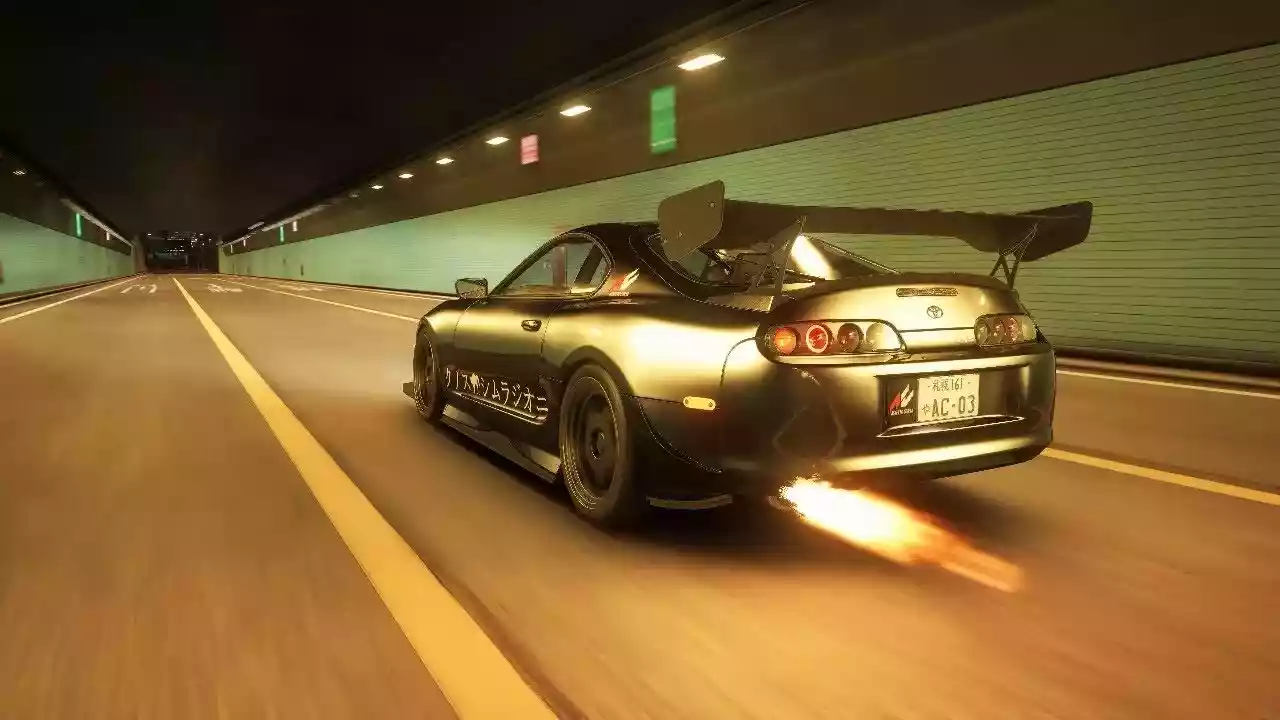
Somewhere between the 43hp economy hatchback that struggles on a steep slope and the 700hp supercar that barely sees the track, lies the sweet spot, the spot where you can drive without feeling like you are straining the car and you are not wasting the other 400hp.
Finding that spot is not just about physics or torque curves, it is about knowing and understanding the delicate balance between the car you want and the road you actually drive.
To determine how much power is really enough, we have to strip away the marketing perspectives and look at the physics of the road.
A 700hp engine makes a great statement in the streets, but the reality of daily driving is governed by much humbler requirements.
Power-to-ratio rule
- Cars are getting faster: Reasons why car speed keeps on escalating
- SundayDrive: How much power do you actually need?
Keep Reading
Raw horsepower figures are meaningless without considering the mass that they have to move.
A 150hp engine in a hatchback weighing 1200kg feels a lot more punchy and aggressive when we compare it to a 150hp engine in a luxury SUV weighing over 2000kg.
The SUV in this instance would feel dangerously unresponsive because of its weight.
For a naturally balanced driving experience, aiming for a ratio of roughly 90-110hp per 1000kg is often cited as the sweet spot for modern cars.
This power-to-weight ratio provides enough power to feel confident on the road without the fuel penalties of an actually big and more powerful engine.
Overtaking boost
The most critical safety-related need for power is not top speed, it is the mid-range acceleration, mostly from 60 km/h to 120km/h.
You need enough reserve power to pass a 16-wheeler truck on a single-lane road without worrying much about the oncoming traffic.
If the car takes 11 to 15 seconds to reach highway speeds, it means that the power it has can actually cause traffic congestion because it should have enough power to escape a tight spot quickly and with ease.
A car can actually use 40 to 60hp when it is cruising at highway speeds, but when overtaking, the engine needs power to quickly increase speed, and in this point in time, a driver knows if the car has enough horsepower or it has less.
A car with less horsepower will take a long time to overtake, which then becomes unsafe when you are on a highway.
The power you need is not just about big numbers on paper, the real measure of a car’s performance is how efficiently it can deliver a brief surge of acceleration when overtaking, because that is when drivers truly rely on power.
Terrain and payload
On flat highways, cars require surprisingly little power to maintain speed. Once a car reaches cruising speeds, the engine mainly works to overcome aerodynamic drag and rolling resistance.
Driving at 100km/h on a completely flat highway might require about 40 to 60hp, which might get the driver to think the car has enough power until it starts to go uphill.
Climbing a steep hill at the same 100km/h may require three to four times the power used on a flat highway.
Terrain often rewards torque more than horsepower.
For example, many off-road vehicles focus on strong low-RPM torque instead of extremely high horsepower. A vehicle that produces strong torque at low engine speeds can climb hills or move through rough terrain without needing to rev the engine aggressively.
Payload refers to the total weight a vehicle carries in addition to its own mass. This includes passengers and luggage.
The heavier a vehicle becomes, the more force is required to accelerate it or move it uphill.
For example, a 500hp truck driving empty feels quick and responsive, but that same truck carrying a full load may feel significantly slower because the engine must move much more weight.
The real test for power occurs when terrain and payload combine.
For example, imagine a fully loaded truck climbing a mountain on a rough surface. In this situation, the engine has to overcome the vehicle’s weight, the steep incline and also the rolling resistance of the road.
If this is your everyday road, the vehicle you buy must have lots of power and lots of torque so that you can drive safely daily without actually straining your engine.
Terrain and payload demonstrate that power requirements are situational. For off-road vehicles, power and torque are very important as they ensure smooth power delivery even on rough terrain.
The ideal amount of power, therefore, depends on how the vehicle is used and where.
The law of diminishing returns
The law of diminishing returns states that as you continue to increase the input, while keeping the other factors constant, the additional benefit gained from each extra unit eventually becomes smaller.
There is a mathematical point where more power actually makes a car less usable, especially on public roads.
In a high-performance car, it might be very difficult for you to use full throttle for three seconds straight before exceeding the speed limit or hitting another vehicle in front.
Modern engineers understand and focus more on balance rather than more horsepower. They improve performance through better aerodynamics, improved transmissions and even hybrid assistance.
In unison, these factors bring out a much more stable car to drive which has enough boost to overtake and an overall day-to-day driving experience.
Reliability and longevity
An underpowered engine is often a stressed engine.
If a small motor has to work at its absolute limit just to keep up with traffic, internal components wear out faster, and fuel economy actually becomes bad because the throttle is always pinned.
Always pinning the throttle for power means the engine stays at high RPM, and a higher RPM means that the pistons will be travelling up and down the cylinders a thousand times more per kilometre than a larger and more powerful engine. This eventually leads to faster wear on piston rings, bearings and valves.
An engine pushed to 90% of its capacity generates significantly more internal heat than a more powerful engine running at 30% capacity to do the same job. Over time, this heat degrades oil faster and makes plastic and rubber components in the engine bay brittle.
Conclusion
Ultimately, the quest for the perfect horsepower figure is less about chasing a specific number and more about achieving a state of mechanical harmony.
Whether you are navigating the steep inclines of a mountain pass or merging into a fast-moving highway flow, the "right" amount of power is that which allows the vehicle to perform its duties without strain or hesitation.
When a car has a sufficient power reserve, it ceases to be a machine you have to manage and becomes a seamless extension of your intent, providing the confidence to handle unpredictable road conditions while preserving the longevity of its most vital components.
In a world increasingly focused on the extremes of performance, the true mark of a well-engineered vehicle lies in that sensible middle ground where utility meets efficiency.
While the allure of triple-digit speeds and track-ready specs will always capture the imagination, the reality of daily driving demands a balance that favours reliability over raw ego.
By prioritising a healthy power-to-weight ratio and sufficient low-end torque, we find that "enough" power isn't just a luxury—it is the foundation of a safer, more sustainable, and ultimately more enjoyable relationship with the road.