The greatest illusion of the digital age is not that we know too little, but that we believe we know enough.
Every notification, headline and trending topic reinforces the comforting belief that we are informed citizens, even though genuine understanding demands something that no algorithm, news feed or endless stream of updates can provide: the patience to interrogate information, the curiosity to seek context and the discipline to question how narratives are constructed before accepting them as truth.
The digital revolution has fundamentally transformed humanity's relationship with information by dismantling traditional barriers to access and placing an unprecedented volume of knowledge within reach of anyone with an internet connection, yet this remarkable achievement has quietly given rise to a paradox that receives far less attention than it deserves, namely that while information has become increasingly abundant, genuine understanding appears to have become increasingly scarce. We have mastered the art of finding information with extraordinary speed, but we have become less certain about how to evaluate it, interpret it and distinguish between simply knowing that something happened and understanding why it happened in the first place.
This paradox lies at the heart of what communication scholars describe as information overload, a condition in which the volume of available information grows far more rapidly than our capacity to process, evaluate and synthesise it into meaningful knowledge, thereby shifting the communication challenge from gaining access to information towards making sense of it. Every day, audiences navigate an overwhelming landscape of news websites, podcasts, newsletters, opinion columns, social media platforms and instant messaging applications, all competing relentlessly for one increasingly limited resource, which is not information itself but human attention.
Perhaps the most significant consequence of information abundance is not that people know less but that they often feel they know more than they actually do, because constant exposure to headlines, summaries and commentary creates a powerful sense of familiarity that can easily be mistaken for understanding. We recognise names, events and slogans with remarkable ease, yet recognition should never be confused with comprehension, because genuine understanding demands an appreciation of history, context, competing perspectives and the subtle relationships that cannot be captured within a headline or a sixty-second video.
This is where the language of contemporary media deserves closer examination, because expressions such as Breaking News, Stay Informed, Everything You Need to Know and Live Updates do far more than describe content, they construct a discourse in which immediacy becomes synonymous with importance and speed becomes a substitute for depth. These familiar phrases encourage audiences to believe that remaining constantly connected is equivalent to remaining genuinely informed, even though the very urgency they promote often leaves little room for reflection, comparison or critical interpretation.
Communication has never been a neutral process of transmitting facts from one source to another, because every headline, press statement, policy announcement and media report inevitably reflects choices about what should be emphasised, what should be omitted and whose voices should be amplified, meaning that language does not merely report reality but actively participates in constructing it. The stories we consume are therefore never just collections of facts, but carefully organised narratives that shape public understanding by framing issues in particular ways while making alternative interpretations appear less visible or even unnecessary.
Faced with this relentless flow of information, audiences naturally develop cognitive shortcuts that enable them to cope with the demands of modern communication, relying increasingly on headlines instead of articles, summaries instead of detailed reports and familiar commentators instead of diverse sources, not because they are unwilling to think critically but because the sheer abundance of information makes exhaustive analysis practically impossible. These shortcuts undoubtedly help people navigate an increasingly complex information environment, yet they also create fertile ground for the illusion that consuming more information inevitably produces deeper understanding.
- Desert Jewels outshine the Gems
- Gems ready for Malawi tourney
- Outrage over release of cable-thieving cops
- PR & communications: Seven reasons why internal communications is important
Keep Reading
The challenge, therefore, is not the existence of information abundance itself, because greater access to knowledge has expanded educational opportunities, strengthened civic participation and enabled voices previously excluded from mainstream media to contribute to public discourse in meaningful ways. Rather, the challenge lies in confusing access with comprehension, assuming that because information is available, understanding naturally follows, when in reality understanding remains an intellectual achievement that requires careful interpretation rather than continuous consumption.
For communicators, journalists and organisational leaders, this changing information environment demands a fundamental shift in priorities, because communication can no longer be judged solely by its visibility, reach or engagement when audiences increasingly seek clarity rather than volume and insight rather than repetition. The organisations that will earn lasting credibility are unlikely to be those that produce the greatest quantity of content, but those that consistently provide context, explain complexity and help audiences navigate competing narratives with honesty and intellectual rigour.
Media literacy has consequently become one of the defining competencies of contemporary society, not because people lack access to information but because they require the analytical skills to recognise framing, question assumptions, identify omissions and understand that every act of communication reflects particular values, interests and perspectives. The ability to ask who is speaking, why they are speaking in that particular way and whose voices remain absent has become every bit as important as the ability to locate information itself.
Perhaps the defining communication challenge of our time is not misinformation or disinformation alone, significant though both undoubtedly are, but the far subtler conviction that constant exposure to information is equivalent to genuine knowledge, because such a belief discourages the habits of reflection, scepticism and critical inquiry upon which informed citizenship ultimately depends. In a world overflowing with information, the most valuable individuals will not be those who consume the greatest number of headlines or follow the largest number of news sources, but those who possess the intellectual discipline to connect ideas, recognise patterns and look beyond the stories they are told in order to understand the narratives that shape them.
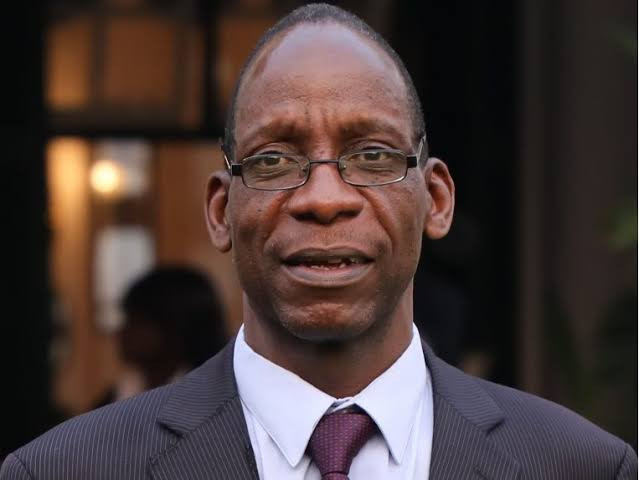
* Fungayi Antony Sox is the team leader& managing editor at TisuMazwi—a communications-driven social enterprise helping individuals and organisations shape, manage, and distribute their stories. He writes at the intersection of publishing, digital media, and African narrative transformation. A YALI alumni and award-winning communications consultant, he has worked with over 300 authors,creatives and institutions across Zimbabwe and Africa. He can be contacted on +263 776 030 949 or fungayisox@gmail