in the groove with Fred Zindi
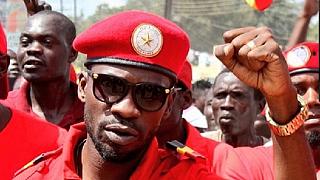
Bobi Wine, a Ugandan musician and member of parliament who was in Zimbabwe for the MDC’s May 24 to 26 congress held in Gweru last month, is a persecuted man in his own country as many of his concerts last year and this year were cancelled due to political messages in his lyrics.
He has been in and out of prison in recent years and his music business has come to a standstill as most of his concerts have been cancelled by the state.
According to a recent Ugandan top newspaper, The Daily Monitor, President Yoweri Museveni had to compensate promoters of a cancelled Bobi Wine show and said that he will not tolerate music shows that are laced with politics. He also warned that in future, nobody will be compensated for shows that have been cancelled because of politics.
Museveni made the warning during a meeting with members of the Uganda Music Promoters and Venue Owners Network at State House, where he gave them Shs2 billion ( $1, 3761,31 Shs) as compensation for losses they suffered after police cancelled Bobi Wine’s concerts on account that his songs contained political activism messages. Bobi Wine is also the Kyadondo East MP.
Museveni is concerned about “harmful” music shows that he told music promoters to avoid. He also made it clear that politics in some shows will not be tolerated and warned that he will not compensate anyone in future whose show will be cancelled because of politics.
Tonny Ssempijja, the coordinator of Uganda Music Promoters and Venue Owners Network, said their State House meeting with Museveni was intended to fight for the rights of promoters and that before meeting the president, they had several engagements with General Salim Saleh, Speaker of Parliament Rebecca Kadaga and other leaders.
The cash and other donations from Museveni came at a time when some promoters, such as Yasin Kaweesa and Ema Serugo, lost their property to money lenders. The two were some of the promoters who hired Bobi Wine for the Kyarenga concerts, which were cancelled by the police.
- Chamisa under fire over US$120K donation
- Mavhunga puts DeMbare into Chibuku quarterfinals
- Pension funds bet on Cabora Bassa oilfields
- Councils defy govt fire tender directive
Keep Reading
“This is our business. Like others go to China to import, we buy music from artistes with good hits,” Ssempijja said.
The “presidential handshake” was communicated during a meeting at State House three weeks ago.
Sources close to the meeting said Museveni met various artistes and promoters after cries of losses that they incurred after the cancellation of several of Bobi Wine’s Kyarenga music concerts in various parts of the country last year.
The artistes and promoters contacted Saleh, who coordinated the meeting with Museveni through Ssempijja.
Paul Katongole, the chairman of the Uganda Music Promoters Network, said: “Unlike what was being reported on social media, we didn’t go to the president to ask for money to sideline Bobi. In fact, we asked the president that government should give us a clear official position on Bobi Wine such as Tanzania did when Diamond Platinumz was banned and the president’s reply was that politics and music should be separated.”
Uganda, Tanzania and Egypt, among many other African countries, are prime examples of unjust censorship enforced upon artistes, many of whom are banned from playing live, releasing their music or partaking in public dialogues around politics.
This is nothing new in the world of music. Music has a powerful influence on the populace and can set emotions high.
We all know how Bob Marley changed the face of Jamaica and influenced the rest of the world by simply singing political songs such as Redemption Song, Zimbabwe, Chant Down Babylon, Buffalo Soldier , Get Up; Stand Up, Stand Up for Your Rights, Blackman Redemption, and War, to mention only a few.
We also know how Bob Marley brought together two rival politicians, Michael Manley and Edward Seaga, during his peace concert in Jamaica. That is the power of music. It can move and remove governments.
During Zimbabwe’s struggle for independence, song and dance played an essential role of unifying the freedom fighters and the masses at the same time raising their morale through musical messages that defined the purpose of the armed struggle.
In a bid to preserve the morale of freedom fighters in camps and the morale of the masses at home, song and dance was used to educate, inform and entertain. For instance, Comrade Chinx led the guerillas with songs like Maruza Imi and Vapambi Vepfumi. Freedom fighters used music and dance at all-night gatherings called mapungwe to educate the masses (povo) about the objectives of the armed struggle.
Within Zimbabwe, Thomas Mapfumo’s Pfumvu Paruzevha, Gwindingwi Rine Shumba, Zimbabwe YeVatema, Pamuromo Chete and Hokoyo are examples of political songs that inspired the masses during the armed struggle. Without political songs, people like Mukanya or Hosiah Chipanga would be irrelevant.
The connection between music and politics, particularly political expression in music, has been seen in many cultures. Although music influences political movements and rituals, it is very clear how general audiences relate to music on a political level.
The lyrical content in hip-hop songs, as well as in many other genres, does not often sit well with those in power, with many governments passing and upholding controversial laws designed to silence the voices of artistes who want to see better governance in their countries.
Many of these laws are disguised as ones based on grounds of morality, religion and age-old cultural norms. The excuse in the enactment of such laws is that the songs and artistes they target are responsible for corrupting the youth and sowing discontent among the populace. And although governments may sometimes be correct in their assessment of profanity or adult content, many of them are seen blatantly using broad censorship laws to stifle freedom of expression and criticism where it is mostly needed.
It goes without saying that musicians themselves have a responsibility to speak truth to power in a mature and constructive manner; many artistes, in their efforts to be social justice activists, miss the mark by being inordinately outrageous and in the process end up offending even those whom their messages are meant for. This is where the censorship versus freedom of expression dialogue asks a number of important questions: Where do we draw the line and should governments be the ones dictating what constitutes acceptable and unacceptable artistic expression?
At any rate, with the likes of YouTube and hundreds of other streaming services, governments can do little to control the publishing of content; when they censor artistes, all they do is show their authoritarian leanings and promote the very content they want to silence. In the case of Uganda, Museveni can only ban live performances by Bobi Wine, but he can’t stop the music being played on YouTube. That is the beauty of technology.
Very often, musicians who are already popular, will find it easy to lure their audiences into singing their political compositions, but to those who do not have large audiences behind them, this might be an uphill task.
In Zimbabwe, Last Chiyangwa, aka Tambaoga, during the 2002 elections, came out with the song Agrimende which had the lyrics, “The only Blair I know is a toilet”.
Chanting down the then Bristish Prime Minister Tony Blair was the acceptable political thing at the time. Despite non-stop airplay on ZBC’s stations, the people received this song with mixed feelings as Tambaoga was a little-known artiste and the political song did not bring him much money as very few people bought it. However, politicians certainly noticed him with Saviour Kasukuwere handing over $200 to him.
Another musician from the City of Gweru, Joseph Nhara, aka Man Soul Jah, who fronted the People Against Cruel Existence (PACE) reggae band, recorded a series of political albums such as Dreams of a Freedom Fighter, with tracks like Lacksley Castell’s composition, Give us the Land, Mr Government Man, which assisted in delivering political messages to the people. It was through this political music that he was at one time appointed head of ZBC’s Power FM radio station in Gweru.
In 2003, Leonard Karikoga Zhakata released the album Hondo, which did not receive any airplay. Zhakata suspects that this was due to its political message which did not please the establishment as it spoke about the suffering of the masses. Analysts claim that if airplay had been allowed, it probably would have inspired the masses to rise against the establishment.
So should artistes separate their music from politics?
Feedback: [email protected]