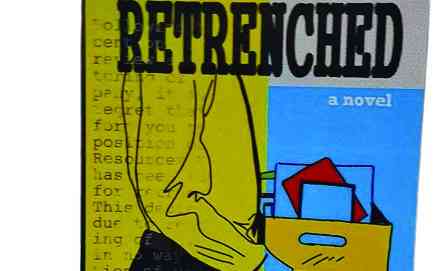
Retrenched by Black Edward
Published by Elane Arts (2026)
Most books invite us to observe a stranger’s life from a comfortable distance. However, Retrenched by Black Edward breaks down that barrier completely. It’s not just about telling a story; it feels like an unexpected meeting with your own reflection, surprising, personal, and utterly captivating.
At first glance, the novel seems to centre on a familiar fear: losing a job. But as the story unfolds, it becomes clear that this is not simply a novel about retrenchment as the title suggests.
It is about identity, roots and heritage. It is also about pride, cruelty, toxic masculinity, and the fragile things people build their lives around.
It encourages us to think about life's big questions with honesty and warmth. When status is gone, what do we truly have? Who do we become when comfort and applause fade away? Do we really need all the noise we create? And without roots or titles, who are we at our core?
Edward explores these questions through Felix Muchero, a corporate HR manager whose life changes overnight after he receives his retrenchment letter. One moment, Felix is firing employees, untouchable, and feared, ruling the sleek world of offices and boardrooms. The next, he’s on the outside looking in, humiliated and lost.
The change is sudden and brutal. He has to abandon the image he built so carefully and walk the dusty streets of Glen Norah. There, his cousin Panashe, once his target for torment, gives him a small job: running a tuckshop. For a man who loved authority and looked down upon others, this new reality is almost too much to bear.
- After the retrenchment letter
Keep Reading
Yet this is where the novel truly comes alive.
Edward writes ordinary life with remarkable tenderness and sharp observation. The core houses, crowded kombis, shouted conversations, and daily hustle of ghetto life feel vivid.
The world of the tuckshop is filled with small struggles that carry enormous meaning. Every loaf of bread sold, every packet of maputi counted, every request for credit reveals something about dignity, and human connection.
What makes Retrenched especially moving is that Felix’s journey is not rushed or exaggerated. There are no dramatic speeches or sudden miracles. Instead, change happens slowly, through embarrassment, reflection, failure, and unexpected moments of grace. He learns to listen. He learns humility. He begins to understand the people he once ignored. Even then, traces of his old arrogance remain, making his transformation feel deeply human and believable.
Panashe becomes one of the quiet strengths of the novel. He is patient, grounded, and emotionally intelligent in ways Felix never appreciated before. Through him, the story gently challenges the idea that success is limited to titles and expensive clothes.
The informal economy, often dismissed or misunderstood, is presented here with respect and complexity. Edward demonstrates the intelligence, discipline, and emotional strength necessary to thrive within it.
One of the most memorable symbols in the novel is the manyawi tree. Fast-growing and impressive from a distance, it appears strong but lacks deep roots. When storms come, it falls easily.
The image becomes a powerful reflection of Felix himself and, perhaps, of many modern lives built on appearance rather than substance. It is a simple metaphor, but one that stays with the reader.
The language of the novel deserves special praise. Edward writes in a style that feels natural, alive, and unmistakably Zimbabwean. English flows comfortably alongside Shona and Ndebele expressions, creating dialogue that sounds authentic rather than forced.
The local languages are not inserted for decoration. They carry emotion, rhythm, humour, and cultural texture that English alone could never fully capture.
When characters switch languages, it feels exactly like real conversations heard in homes, offices, kombis, and markets across Zimbabwe.
Certain words arrive with a particular warmth or sharpness that translation would weaken. A phrase spoken in Shona or Ndebele often says more than a paragraph of explanation could.
Edward trusts the reader enough to move naturally between languages, and that confidence gives the novel a unique voice.
This blending of languages also gives the book emotional intimacy. The reader does not simply observe the characters. One feels close to them, as though sitting beside them during their conversations, arguments, and silences. The prose is simple enough to be accessible yet rich enough to carry emotional depth and social commentary.
Another strength of Retrenched is its balance. The novel carries serious themes, but it never becomes heavy or preachy. There is humour, irony, and tenderness throughout.
Edward understands people well enough to show both their flaws and their humanity. Felix can be frustrating, arrogant, and blind to others, yet the reader still hopes for his growth. That emotional complexity is one of the book’s greatest achievements.
The novel also speaks powerfully to modern realities. In a time when many people live with uncertainty, unstable employment, and constant pressure to appear successful, Retrenched feels painfully relevant. Students facing difficult job markets, professionals chasing promotions, parents carrying family expectations, and ordinary workers trying to maintain dignity will all recognise parts of themselves within these pages.
At the same time, the story reaches beyond economics. This is not merely about money or employment. It is about the dangerous habit of attaching self-worth to status.
Felix’s greatest loss is not retrenchment. It is the collapse of the identity he built around being important. Watching him slowly rebuild himself on more honest ground becomes the emotional heart of the novel.
Edward also deserves credit for writing a story that can be enjoyed on different levels. One reader may appreciate it as a deeply personal story of change and redemption.
Another may read it as social commentary about class, corporate culture, and urban Zimbabwean life.
Teachers and students could discuss its themes for hours, while ordinary readers may simply connect with its emotional truth.
By the end of the novel, the reader begins to reflect on their own life. What are we building our identities on? Are our roots deep enough to survive hardship? How much of our confidence depends on titles, salaries, or public approval? Are we treating each other well? That is the true strength of Retrenched. It does not shout. It stays with you gently and persistently.
Edward has written a novel that is thoughtful, emotionally honest, and beautifully grounded in everyday experience. Through warm storytelling, memorable characters, and rich language, he reminds us that losing a job can sometimes become the beginning of seeing life more clearly.
Retrenched is not just a story about falling. It is a story about learning how to stand differently after the fall. It is also a story about two trees and watering the right one.