IMAGINE two shopkeepers who have traded with each other every day for forty years. One morning one of them puts a padlock on the other’s delivery gate. That is roughly what happened between the United States and Canada last weekend, and although it took place eight thousand miles away, some of it will reach us here. Let me explain it in plain terms, because the word “tariff” gets thrown around a great deal and is rarely explained.
What a tariff actually is
A tariff is a tax a government charges on goods coming into its country. If Zimbabwe put a 20% tariff on imported cooking oil, a bottle arriving at Beitbridge worth one dollar would cost the importer one dollar twenty before it ever reached a shelf.
The important thing is who pays. It is not the foreign company that pays the tax. It is the importer at the border, and then the shopkeeper, and then you. A tariff is a tax on your own citizens for buying something from abroad. Governments use them to make imported goods expensive so that people buy the local version instead.
What happened last weekend
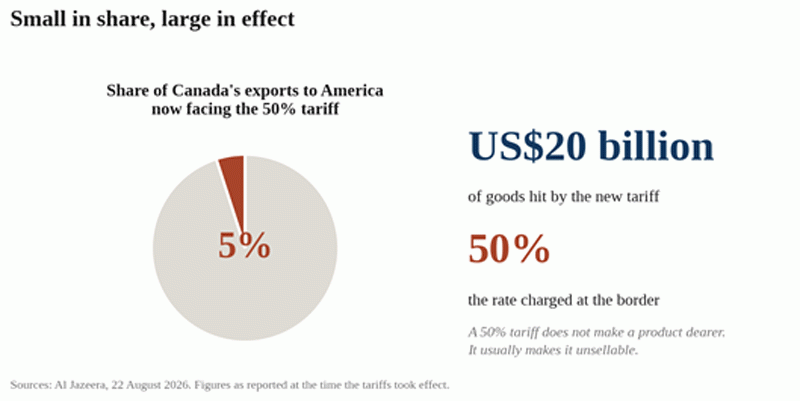
On August 22 the United States began charging a 50 percent tariff on about US$20 billion worth of Canadian goods. Electronics, industrial machinery and dairy products are among the items affected. Tariffs were already in place on Canadian steel, timber and motor vehicles.
It followed three days of talks in Washington that ended badly. Canada’s Prime Minister, Mark Carney, pulled his negotiators out and sent them home, saying the American side had changed the terms at the last moment. In his words, the new proposals were “uneconomic, unfair” and, he said, they “asked too much and offered too little”. He also said Washington had tried to limit Canada’s freedom to make trade agreements with other countries.
Washington told a different story. The United States Trade Representative, Jamieson Greer, said Canada had walked away from terms it had already accepted, and called it a missed opportunity.
- BCC flights multiple tenders
- In Full: Nineteenth post-cabinet press briefing: July 05, 2022
- Byo City polishes Manica Diamonds
- Bullets shoot down Chiefs
Keep Reading
Canada has said it will match the measures dollar for dollar from 8 September, taxing American steel, dairy, appliances, farm machinery, paper and electronics on the way in.
Why 50% is different
A small tariff makes a product a little dearer and people grumble and carry on buying. A 50% tariff usually does something else entirely. It prices the product out of the market completely. A trade specialist at McGill University in Montreal put it plainly: tariffs at that level would effectively price hundreds of Canadian goods out of the United States altogether.
So this is not really a tax that will be collected. It is a door being closed. And when a door that size closes, goods and money have to find somewhere else to go.
What it means for us
The first effect is on what we dig out of the ground. When two large economies trade less with each other, their factories build less, and factories that build less order fewer metals. Zimbabwe sells platinum, chrome, lithium and gold into that same world market. We do not set those prices; we receive them. A slower world is a cheaper world for the things we export, and that reaches the fiscus, the mines and the towns built around them.
The second is closer to home for many families. There are a great many Zimbabweans living and working in Canada. Tariffs raise the price of ordinary goods for the people paying them, and when a household abroad is squeezed, the money sent home is very often the first thing to be trimmed.
The third is the one I would most like readers to sit with, because it is not really about tariffs at all.
Canada is America’s closest ally and its largest trading partner. The two countries share a language, a border and a long history. And Canada still found the terms changed at the final hour, and still walked away without a deal. If that is the treatment available to Canada, we should be honest about how much bargaining power a small economy in southern Africa really holds in the same room.
That is worth remembering when we hear that a trade agreement is being negotiated on our behalf. Zimbabwe has never been a beneficiary of the African Growth and Opportunity Act, the arrangement that lets many of our neighbours sell into America without paying duty. That programme has now been extended by only one year, to the end of December. One year at a time is not a foundation anybody can build a factory on.
And the opportunity
There is one more thing, and it is not gloomy.
Canada has just been reminded, painfully, that depending on a single customer is dangerous. Mr Carney has made it clear his country intends to find trading partners elsewhere, and he complained openly that Washington tried to stop him doing exactly that. A wealthy country actively shopping for new suppliers is a rare thing. Somebody representing Zimbabwean and African producers ought to be on a plane.
The lesson is the same one at every level, from a nation down to a household. If one customer, one employer or one crop is the whole of your income, you are not running a business. You are holding a hope. Canada is learning that this month in public. We have had many opportunities to learn it more quietly.
- Isaac Jonas is an applied economist and founder of Streetwise Economics, an independent economics research and advisory platform that helps people and businesses make better financial decisions through practical, evidence-based analysis of markets, investing and the economy. This article is for educational and informational purposes only and does not constitute financial, investment or legal advice. Every investment involves risk, and readers should conduct their own research or seek advice from a licensed financial professional before making investment decisions. For more insights, visit www.streetwiseeconomics.com and follow Streetwise Economics on YouTube, Facebook and LinkedIn.