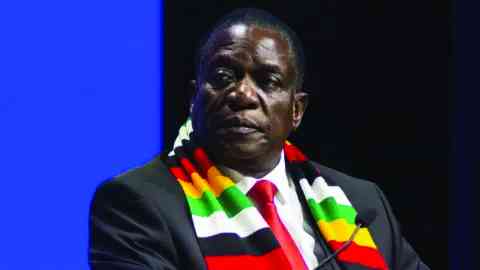
Zimbabwe is experiencing one of the most defining periods in its national development trajectory under the visionary leadership of President Emmerson Mnangagwa.
Since the advent of the Second Republic, the government has pursued an ambitious yet pragmatic development agenda centred on economic modernisation, infrastructure expansion, agricultural transformation, industrial growth, investment promotion, digital innovation, land tenure reform and constructive international engagement.
Collectively, these strategic interventions are strengthening the country's economic foundations and laying a firm platform for the realisation of Vision 2030.
The Second Republic has distinguished itself through a strong emphasis on delivering measurable development outcomes.
Significant investments in road rehabilitation, dam construction, energy generation, border modernisation, health infrastructure, education facilities and housing development are transforming communities while improving service delivery and creating opportunities for economic growth.
These achievements reflect a government committed to building a resilient and prosperous Zimbabwe.
President Mnangagwa's leadership has also elevated Zimbabwe's diplomatic standing through a policy of engagement and re-engagement founded on mutual respect, peaceful cooperation and shared prosperity.
Growing confidence in Zimbabwe across regional and international platforms reflects the effectiveness of this diplomatic approach.
- Mavhunga puts DeMbare into Chibuku quarterfinals
- Bulls to charge into Zimbabwe gold stocks
- Ndiraya concerned as goals dry up
- Letters: How solar power is transforming African farms
Keep Reading
The recent outcome in which Zimbabwe reportedly secured overwhelming support during proceedings at the United Nations has been viewed by many as a positive affirmation of the country's constructive engagement with the international community.
Such developments reinforce confidence in Zimbabwe's long-term development prospects and growing international profile.
Another notable milestone was the enactment of Constitutional Amendment Bill No. 3 (CAB3) into law, marking the successful conclusion of an important constitutional legislative process.
This development demonstrates the effective functioning of Zimbabwe's democratic institutions and the country's continued commitment to strengthening governance through constitutional processes.
Stable governance remains a fundamental pillar for sustainable economic development and investor confidence.
The people of Zimbabwe equally deserve sincere appreciation for the support they demonstrated throughout the constitutional process that culminated in the enactment of CAB3.
Their participation reflected patriotism, national unity and confidence in the country's democratic institutions. Such unwavering support for national development initiatives should continue as Zimbabwe advances towards Vision 2030.
Lasting national progress is realised when the government and citizens work together with a shared sense of purpose and responsibility.
National transformation cannot be measured solely through policy pronouncements or legislative achievements. Its true measure lies in effective implementation and tangible improvements in the lives of citizens.
Encouragingly, the Second Republic has continued to translate policy into practical action through strategic programmes designed to unlock Zimbabwe's enormous economic potential.
The Land Tenure Title Deeds and Presidential Title Deeds Programme represent landmark reforms with the potential to redefine Zimbabwe's socio-economic landscape.
Strengthened security of tenure and enhanced property rights provide greater opportunities for citizens to access finance, increase agricultural productivity, stimulate entrepreneurship and attract investment.
These reforms position land as a productive national asset capable of driving wealth creation, food security, industrialisation and sustainable economic growth.
Continued investment in agriculture, mining, tourism, manufacturing, housing, innovation and digital transformation is equally expanding opportunities for employment creation, enterprise development and economic diversification.
These strategic sectors remain central to the government's commitment to building an upper-middle-income economy characterised by inclusive growth, increased productivity and shared prosperity.
Acknowledging these achievements should never be interpreted as overlooking existing challenges. Every nation pursuing meaningful transformation encounters obstacles that require continuous improvement and sound policy responses.
Constructive criticism remains an important pillar of democratic governance because it strengthens accountability, improves implementation and encourages practical solutions.
Equally important, however, is recognising genuine progress where it has been achieved.
Criticism directed only for the sake of criticism neither advances democracy nor contributes to national development.
Zimbabwe will benefit most when public discourse remains balanced, objective and focused on solutions that move the country forward.
President Mnangagwa has consistently encouraged Zimbabweans to embrace peace, unity, discipline, innovation and hard work as indispensable pillars of national development.
These values remain critical as the country implements programmes that require active participation from government, the private sector, development partners, civil society, traditional leaders, religious organisations and every citizen.
National transformation is a shared responsibility that demands collective commitment and active participation from all sectors of society.
Vision 2030, therefore, belongs to every Zimbabwean. Achieving it requires patriotism, accountability, productivity and an unwavering commitment to the national interest.
The progress already recorded under the Second Republic provides encouraging evidence that Zimbabwe possesses the leadership, institutional capacity and determination required to realise its developmental aspirations through sustained implementation of strategic reforms.
Zimbabwe's development journey continues to attract growing domestic and international attention. While challenges remain, the country's trajectory presents significant opportunities for accelerated economic growth, increased investment and broader social development.
The true measure of success will continue to be reflected in improved livelihoods, stronger institutions, modern infrastructure, quality public services, expanded employment opportunities and sustained economic prosperity.
The future of Zimbabwe ultimately depends on unity of purpose and collective determination. President Mnangagwa and the Second Republic have articulated a clear development vision and demonstrated an unwavering commitment to building a modern, prosperous and inclusive nation.
Every Zimbabwean has a responsibility to support this national agenda, celebrate genuine progress, offer constructive ideas where improvement is required and contribute meaningfully towards the realisation of Vision 2030.
United by a shared national vision, Zimbabwe can confidently build a future defined by prosperity, stability and inclusive development for generations to come.
By Clever Marisa (Prof). Social Scientist and Public Health Practitioner. The views expressed here are his own and do not necessarily reflect the views of his affiliated institution or any organisation. He can be contacted via email at [email protected] or on +263777048677