By Born in Zimbabwe in 1987, London based documentary photographer Jono Terry would have been called a ‘born free’ in local parlance.
Instead, he is excluded because of his race and being the descendant of European colonists. Terry comes back to Kariba (a town in northern Zimbabwe) and confronts the dark side of history to a place that holds his happiest memories.
His seven years project culminates in the self-published book titled ‘They Still Owe Him A Boat.’
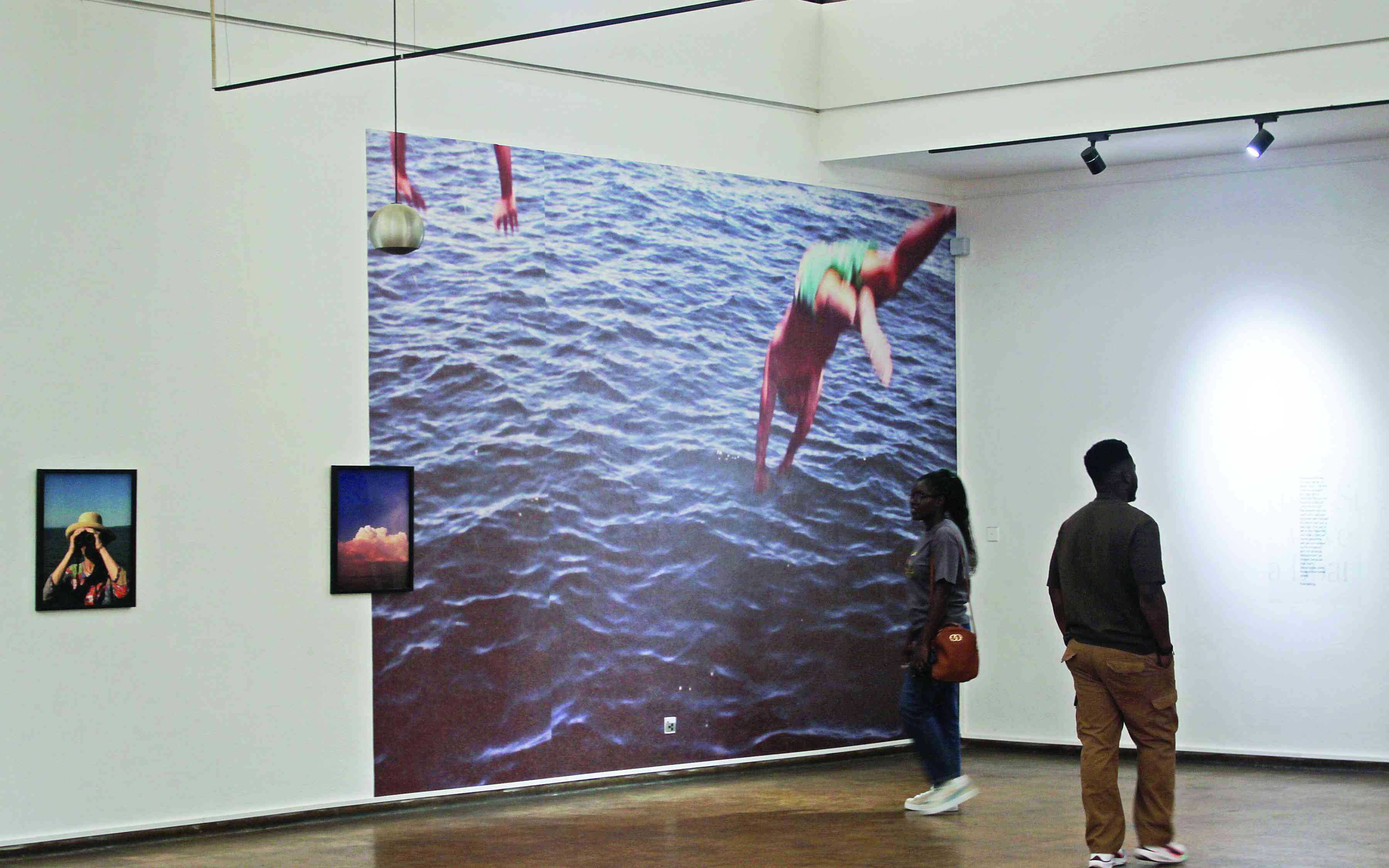
At the National Gallery of Zimbabwe (NGZ), an exhibition by the same title presents Terry’s project to a provincial audience of the original setting (country) of the story, and it elicits a complicated response.
Curated by Fadzai Muchemwa (Curator of Contemporary Art, at the NGZ) the exhibition included excerpts from the book, and ran from the first week of November to mid-January 2026.
The texts reveal expansion of Terry's awareness from recollections of Kariba as “A magical place” to acknowledging a devastating reality of “Resettlement. Destruction. Flooding. Loss.” with regard to the well documented stories on the construction of Kariba Dam in 1955.
By its completion construction of the dam had caused 86 deaths, and displaced approximately 57,000 baTonga.
The achievement was celebrated as an engineering feat and became the largest man-made lake in 1959.
- Gweje relishes fashion achievements
- Daily life struggles reflected in Burning Figure
- 'Film sector drives economic growth'
- ‘Binga not fully marketed’
Keep Reading
Correspondingly it was the worst destruction of natural habitat due to a single human action.
The title of the exhibition is a reference to the false promise made by British colonist Cecil John Rhodes to Lobengula King of the Ndebele people in 1888, upon signing of the fraudulent treaty known as the Rudd Concession.
The duplicitous contract promised in exchange for mining rights - 100 Pounds Sterling per month, 1000 Martini-Henry breech-loading rifles, 100,000 rounds of ammunition, and an armed steamboat on the Zambezi River.
In Zimbabwean traditional customs material and spiritual debts are inherited and passed along the patrilineal or matrilineal side of the family in perpetuity until they are settled.
From that perspective, ‘They Still Owe Him A Boat’ becomes the writing on the wall – and an indictment against the British Empire.
The exhibition includes nostalgic photographs from Terry’s family archive showing his grandparents in a pool at Cutty Sark Hotel, and his mother looking at game through some binoculars.
Other images show relatives participating in various activities including swimming in Lake Kariba, and showing off their catch at the popular Kariba International Tiger Fish Tournament. Terry points out, “But they represent a privileged perspective, one that ignores the experiences of most Zimbabweans.”
Where white people have fun, indigenous people labor in the background. On his website Terry acknowledges the disparity, stating, ‘’there are two histories and two very different experiences of the lake – those of the white and those of the black population.’’
The photographs of indigenous people during their leisure are taken from dimly lit nightclubs away from the lake.
Terry’s images of white people having fun may invoke nostalgia from fellow Caucasians. For indigenous people the attestation to white privilege provokes neither envy nor outrage – just soul sapping ambivalence.
Most Zimbabweans on the other side of the color line have grown up with an observation that economically white people have the best of everything. The hard truth has permeated into the etymology of the Shona language to an extent that colloquially speaking an affluent person is called Murungu which means a white person.
When an affluent Black person enjoys a prosperous lifestyle, it is called Chirungu which means a white person's way of living.
Where Terry’s camera pivots to the indigenous people, there is no escaping the returned gaze from the Black bodies whose eyes are haunted by inherited trauma inflicted through white settler colonial violence.
In Terry's staged portraits the white gaze elicits a much different response in comparison to portraits taken by another Zimbabwe photographer Davina Jogi who undertook a similar assignment on her project titled Kasambabezi (the original name of the Zambezi River).
In her portraiture of the indigenous people, there is no intimacy barrier between Jogi and the subject.
On the other hand, the photographer’s observation of baTonga religious rites betrays the external gaze. One of the photographs is a spiritually symbolic image titled ‘Goat Before Slaughter.’ About the image Terry explains, “In order to appease the anger of the NyamiNyami a sacrifice was made, and according to one source a white goat was slaughtered and left to drift down the Zambezi River.”
In the image a white goat is held by a person who is crudely cropped out. Reductively, the goat becomes the subject. In contrast, recently deceased pioneering photographer Calvin Dondo projects a participant-oriented point of view In his handling of the same theme from his 20 years project titled Tales of Resilience.
Even though some of Terry’s images may confound the indigenous viewer, others transcend their author. A photograph titled ‘Charara Point’ may find resonance with a lot of Black people. It is a distant shot with three young Black men under a tree above a cliff.
One of the subjects stands at the edge of the cliff and peers into the abysmal water. His contemplative gaze seems to be ruminating on thoughts beyond his maturity in a space with a conflicted history.
A unique traditional custom by some of Zimbabwe’s various tribes is when a person who inadvertently causes the demise of another, joins the family of the deceased in grieving. After the initial, bereavement ceremonies both families gather at the home of the victim’s family, a white goat is slaughtered, and they share a meal.
In a similar manner, Terry can be seen as the sacrificial goat offered on the altar of public consciousness. Responding to Stephan Rheeder of Art Africa, about the project he declares “I am not only critiquing cultural and societal issues, I am critiquing myself as part of the system…”
By presenting Terry's project at the NGZ, Muchemwa steers the conversation into a public realm where it sits less comfortably than on a web page, in the book, or on the walls of a foreign museum. In a way the exhibition becomes a site for communal healing through memory, and identity.
About reviewer
Nyadzombe Nyampenza is an Art Critic, Photographer, and Conceptual Artist. In 2023 he was the NAMA recipient for Outstanding Journalist (Print). He was awarded Second Prize atthe Zimbabwe Annual Art Exhibition (2016), and represented Zimbabwe at Bamako Encounters (Photography Biennale) in Mali (2015). Nyadzombe was the 2020 Fellow at Apex Art, in New York City. He is passionate about non-fiction creative writing and his ambition is to raise public awareness about visual arts from Zimbabwe through engaging, accessible, critical, and entertaining narratives.
Are you a reviewer [email protected]